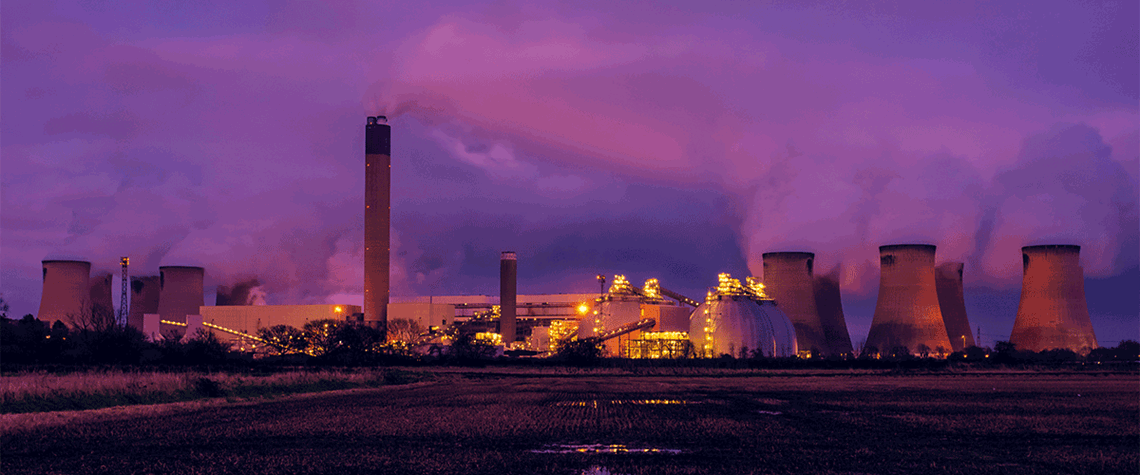
Frontrunner: the UK’s Drax Group is developing Beccs projects
Beccs seeks scale in ‘decisive decade’
Commercial plants yet to launch but growing pipeline of projects could deliver tenfold increase in capacity by 2027
Bioenergy with CCS (Beccs) is in a “decisive decade” as the first commercial-scale plants need to get up and running to prove the technology, reduce costs and attract finance, says Jenny Jones, professor of sustainability at the UK’s University of Leeds. A consensus is forming that around 100EJ of primary energy will need to come from Beccs by 2050 to align with the IEA’s Net Zero scenario. This could allow for 2–4bn t/yr of CO₂ removals, depending on how it is utilised, Jones says. For now, only c.0.46mn t/yr of CO₂ is being captured at sites using bioenergy for power and heavy industry, and most of this is not being stored. Capacity could expand more than tenfold by 2027, Jones says. The p

Also in this section
12 March 2026
Role of world’s largest carbon cap-and-trade market under scrutiny as war in Iran threatens to drive EU energy costs to unsustainable levels
10 March 2026
Europe urgently needs to bring more projects to FID, as CCS investors warn they might divert capital to faster-growing regions
9 January 2026
A shift in perspective is needed on the carbon challenge, the success of which will determine the speed and extent of emissions cuts and how industries adapt to the new environment
2 January 2026
This year may be a defining one for carbon capture, utilisation and storage in the US, despite the institutional uncertainty