



Unlike multinational oil majors whose corporate social responsibility (CSR) footprints stretch across continents, Kuwait Oil Company's (KOC) focus is firmly national. Its initiatives are framed as an extension of state priorities, particularly in a country where oil revenues remain the bedrock of public services, infrastructure and social welfare.
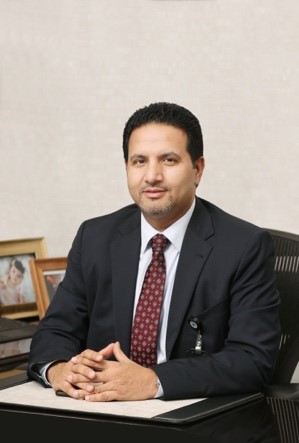
“Our social responsibility plays a significant role in all our activities and operations. Serving our country and community is integral to the culture that is instilled in our employees as soon as they join the company,” said Mohammed al-Basry, manager of the public relations & information group at KOC.
A key element which underpins the firm’s CSR initiatives is the State of Kuwait’s development plan known as “New Kuwait 2035.”
New Kuwait 2035 is a long-term government strategy to transform Kuwait into a diversified, knowledge-based economy, underpinned by human capital development, transparent and inclusive governance and alignment with the UN Sustainable Development Goals.
KOC’s initiatives mainly focus on supporting the education, healthcare and infrastructure needs of Kuwait, as well as decarbonising the energy sector.
The firm runs joint educational programmes with several prominent academic institutions, including Kuwait University, the Public Authority for Applied Education & Training and Harvard University.
“We have established strong partnerships with all of these prestigious institutions, aiming to support and develop the workforce, empower young Kuwaiti graduates, support theoretical and applied education, provide high-level training, and more,” said al-Basry.
These programs aim to supply the Kuwaiti labour market with a steady stream of skilled talent, simultaneously supporting a national target to reduce dependency on expatriate labor.
In healthcare, KOC runs Ahmadi Hospital, a facility that provides critical services to oil sector employees and their families, as well as other supporting activities. In 2024-25, KOC employed 71 new nurses, and the hospital also hosted nursing students, offering them experience in various departments and fostering a connection between education and practical healthcare delivery.
Beyond its facilities, KOC actively promotes health and safety awareness through public outreach programmes, hosting lectures in schools and communities. Meanwhile, various directorates and groups from KOC organise periodic blood donation campaigns.
During the Covid-19 pandemic, KOC was one of the leading entities supporting the government’s efforts in combating the virus.
National emissions reduction strategy
The firm is also actively involved in supporting two parallel emissions reduction plans in the energy sector—a national plan to achieve carbon neutrality by 2060 and the Kuwaiti oil sector’s plan to reach the same goal by 2050.
KOC has established five energy transition strategic initiatives in order to achieve the 2050 targets, which includes zero routine flaring by 2030, enhancing energy efficiency, renewable energy development, CCUS development and carbon offsetting. The firm is already carrying out infrastructure upgrades and minimising fugitive methane emissions through leak detection and repair programmes.
It is electrifying well operations to improve energy efficiency and has initiated a feasibility study for 17GW of renewable energy capacity. Meanwhile it has a phased implementation plan for achieving 26mt/y of CCUS capacity by 2050, and is in the process of developing a large scale CCUS hub in West Kuwait.
KOC frequently integrates environmental conservation projects into its CSR framework. The firm has a total of seven oases and nature reserves established in areas that were previously environmentally depleted. It launched a Marine Colony Project as part of an effort to remediate some of the damage that was caused to Kuwait’s marine habitat after the country was invaded in 1990 by Iraq. The colony consists of 1,000 reef balls that have been placed on the seabed to help encourage marine life in the area. The Kuwait Institute for Scientific Research gathers critical data from the colony that helps KOC better understand and protect marine life in Kuwait’s waters.
Integration with government
CSR effectiveness depends not just on the projects themselves but also on how well companies engage stakeholders.
KOC maintains close cooperation with government bodies across a wide range of sectors—including security, cultural, developmental, and economic—in order to ensure its CSR programmes have the greatest impact possible.
It also continuously monitors the performance of its CSR initiatives and communicates these results to the public. Its ESG reporting has been developed in accordance with international standards.
“We have the necessary flexibility to modify, change, or upgrade any details, provisions, activities, and so forth, by adopting a vision of continuous and meaningful improvement,” said al-Basry.



Comments