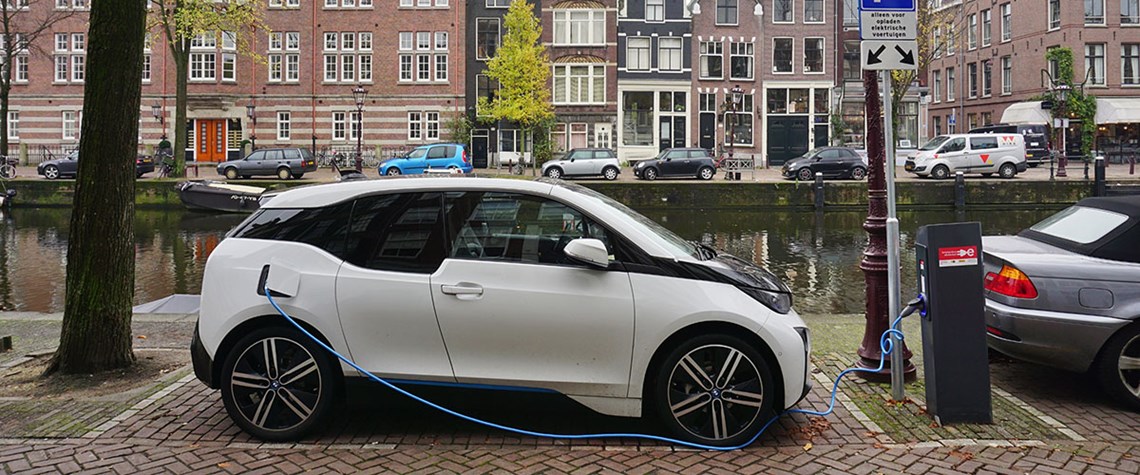
EVs supercharged incentives
If governments want more EVs, they’ll have to pay consumers to buy them and manufacturers to make them—at least for now
Electric vehicles (EVs) can't yet compete with internal-combustion-engine (Ice) rivals. So, if their market share is to keep growing, governments will have to support the trend. Making EVs cheap enough that buyers ditch their gasoline or diesel engine will be key. But manufacturers will probably need some incentives to get mass development under way too. "Possibly the most significant [contributors] are regulatory policies on the auto sector that aren't consumer-facing," says Scott Shepard, an analyst at Navigant Research, a consultancy specialising in green tech. "For example, fuel-efficiency regulations, or credit-trading schemes among auto companies." "If you're in compliance, you have a

Also in this section
9 January 2026
A shift in perspective is needed on the carbon challenge, the success of which will determine the speed and extent of emissions cuts and how industries adapt to the new environment
2 January 2026
This year may be a defining one for carbon capture, utilisation and storage in the US, despite the institutional uncertainty
23 December 2025
Legislative reform in Germany sets the stage for commercial carbon capture and transport at a national level, while the UK has already seen financial close on major CCS clusters
15 December 2025
Net zero is not the problem for the UK’s power system. The real issue is with an outdated market design in desperate need of modernisation