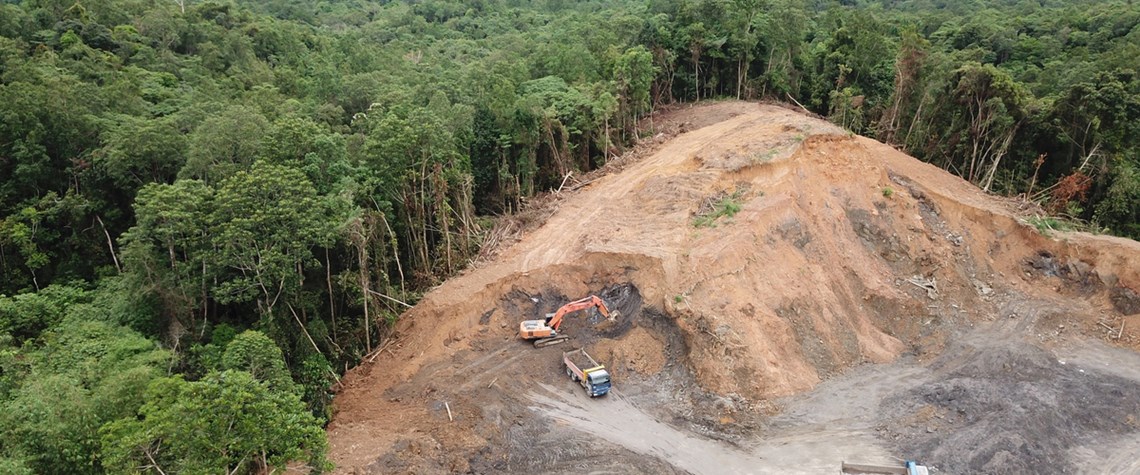
Deforestation in Borneo, Malaysia

Cautionary tales of climate change
Well-intentioned policies can have profoundly damaging consequences. Hopefully, the world takes note as it seeks to meet the Paris goals
The first movers in developing renewable fuels were the Brazilians, with sugarcane-based bioethanol. The government was looking for ways to reduce its massive trade imbalance by lowering imports of gasoline. The result was an unintended ecological disaster. To meet the massive demand, large swathes of rainforest were cut down and sugarcane planted. These plantations were mainly inland, the cheapest land available, and production units were necessarily built nearby to covert the sugarcane before its chemical composition changed. Tanker trucks then transported bioethanol up to 1,700km to the densely populated coastal cities of Sao Paolo and Rio de Janeiro. Production grew so rapidly that Bra

Also in this section
9 January 2026
A shift in perspective is needed on the carbon challenge, the success of which will determine the speed and extent of emissions cuts and how industries adapt to the new environment
2 January 2026
This year may be a defining one for carbon capture, utilisation and storage in the US, despite the institutional uncertainty
23 December 2025
Legislative reform in Germany sets the stage for commercial carbon capture and transport at a national level, while the UK has already seen financial close on major CCS clusters
15 December 2025
Net zero is not the problem for the UK’s power system. The real issue is with an outdated market design in desperate need of modernisation