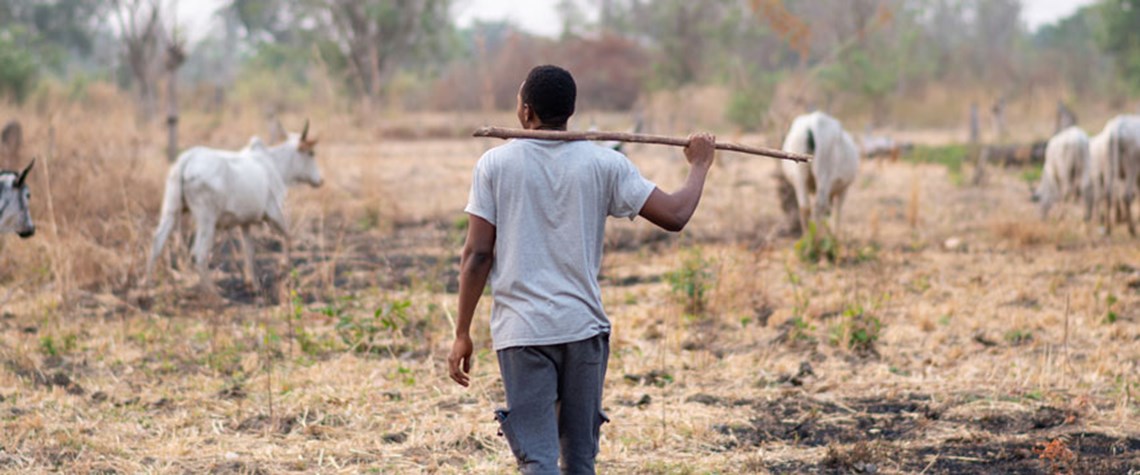
An African herdsman
Climate variation fuelling developing nation security risks
In a range of security and humanitarian contexts, changes to local conditions are multiplying risks and producing contagion effects
The absence of a globally coordinated response at the outset of the coronavirus outbreak represented an essential failure of international cooperation, according to UN secretary general Antonio Guterres in September 2020. Indeed, regional coordination was largely eschewed in favour of national or even local action. Understandably, respondents to the World Economic Forum’s Global Risks Perception Survey (GPRS) 2021, published in February, assessed “multilateralism collapse” as a critical long-term threat to stability. Over a near-term horizon, respondents emphasised their concern regarding “interstate relations fracture”, “interstate conflict” and “resource geo-politicisation”. They felt thes

Also in this section
12 March 2026
Role of world’s largest carbon cap-and-trade market under scrutiny as war in Iran threatens to drive EU energy costs to unsustainable levels
10 March 2026
Europe urgently needs to bring more projects to FID, as CCS investors warn they might divert capital to faster-growing regions
9 January 2026
A shift in perspective is needed on the carbon challenge, the success of which will determine the speed and extent of emissions cuts and how industries adapt to the new environment
2 January 2026
This year may be a defining one for carbon capture, utilisation and storage in the US, despite the institutional uncertainty