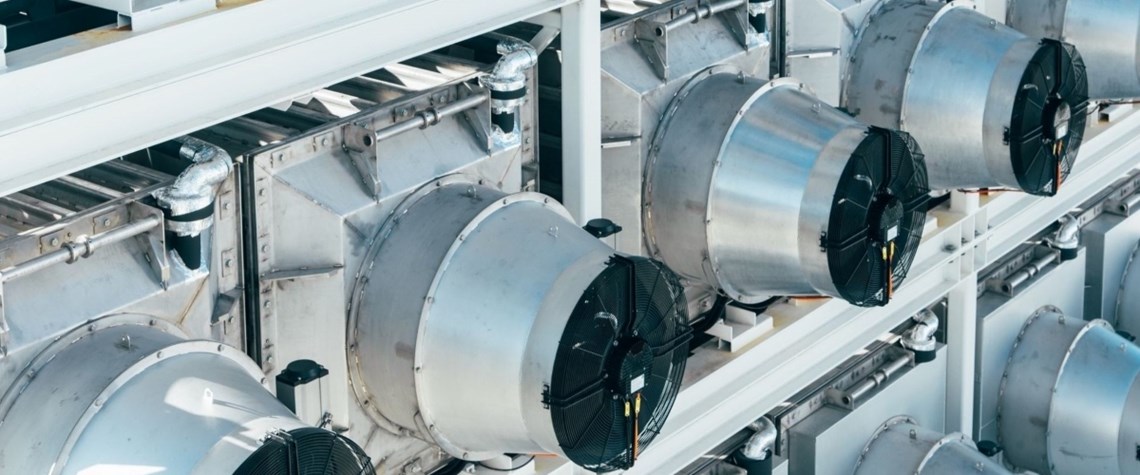
The largest operational DAC facility was opened in September by Climeworks
Subsidies key to carbon capture growth
Attempts to scale up CCUS have failed due to lack of guaranteed long-term revenue
Current market incentives may not be enough to support the rapid upscaling of carbon capture, utilisation and storage (CCUS) and other carbon removal technologies needed to reach net zero, according to a recent paper from Japan’s Research Institute of Innovative Technology for the Earth (RITE). CCUS has been touted as a route to not only directly reduce annual emissions, but also facilitate the production of blue hydrogen. The scale of carbon that must be captured to prevent temperatures from rising beyond 1.5°C is already immense. The IEA estimates that 7.6bn t CO₂/yr must be captured by 2050 to reach net zero that year. However, only 21 CCUS facilities—capturing c.40mn t CO₂/yr—had come on

Also in this section
12 March 2026
Role of world’s largest carbon cap-and-trade market under scrutiny as war in Iran threatens to drive EU energy costs to unsustainable levels
10 March 2026
Europe urgently needs to bring more projects to FID, as CCS investors warn they might divert capital to faster-growing regions
9 January 2026
A shift in perspective is needed on the carbon challenge, the success of which will determine the speed and extent of emissions cuts and how industries adapt to the new environment
2 January 2026
This year may be a defining one for carbon capture, utilisation and storage in the US, despite the institutional uncertainty