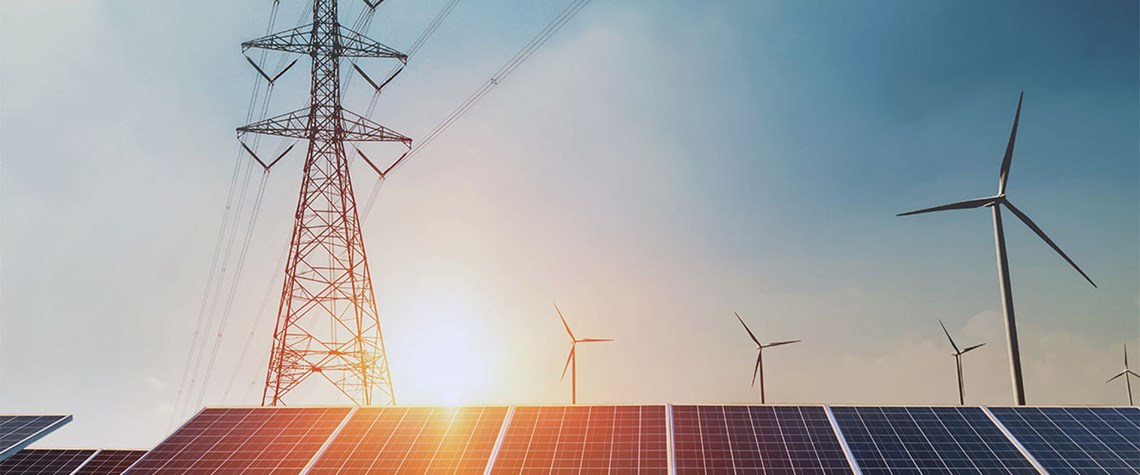
The US aims to decarbonise power grid by 2035
Grid connection queues threaten US renewables goals
Concerns about pace of expansion as average wait time for renewable power projects seeking grid connections reaches almost four years
A lack of power transmission capacity threatens the ability of the US to meet its renewable energy targets, but the energy permitting bill proposed by Democratic Senator Joe Manchin could significantly improve the outlook for transmission projects if it passes Congress. By the end of 2021, 930GW of solar and wind projects were seeking to connect to the US grid, data from the Department of Energy’s Berkeley Lab show. This represents most of the capacity needed for the US to achieve its target of zero-carbon electricity by 2035. A report by non-profit Gridlab estimates 1,100GW of new wind and solar would be needed to achieve a 90pc-clean grid by 2035. The average queue time is almost four year

Also in this section
12 March 2026
Role of world’s largest carbon cap-and-trade market under scrutiny as war in Iran threatens to drive EU energy costs to unsustainable levels
10 March 2026
Europe urgently needs to bring more projects to FID, as CCS investors warn they might divert capital to faster-growing regions
9 January 2026
A shift in perspective is needed on the carbon challenge, the success of which will determine the speed and extent of emissions cuts and how industries adapt to the new environment
2 January 2026
This year may be a defining one for carbon capture, utilisation and storage in the US, despite the institutional uncertainty