Israel targets 20pc electricity from renewables by 2025
Israel accelerates solar power expansion
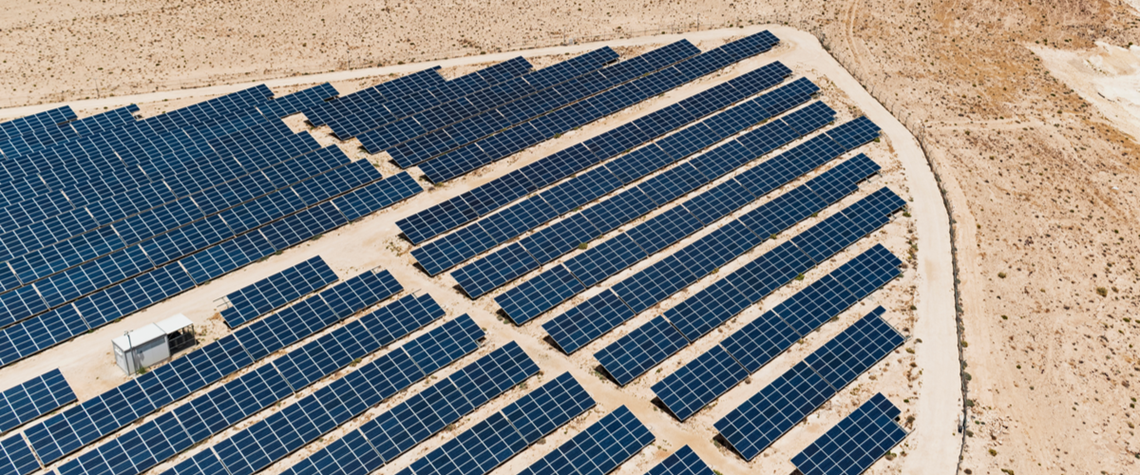
The allocation of more than 1GW of new solar capacity to developers in late 2021 is testament to the new coalition government’s commitment to renewables
Israel’s renewables sector is regaining momentum following last year’s change of government, which saw veteran Prime Minister Benjamin Netanyahu’s gas-friendly administration toppled by an eclectic coalition in which environmentalists are considerably better-represented. A prominent local firm has won the long-awaited contract to develop the country’s largest solar project, near Dimona in the southern Negev desert, while permits to install around 800MW of capacity have been allocated in the Israeli Electricity Authority’s third solar-plus-storage auction. The six-month-old coalition government also declared a year-long moratorium on upstream gas licensing to allow energy policy to focus on d

Also in this section
12 March 2026
Role of world’s largest carbon cap-and-trade market under scrutiny as war in Iran threatens to drive EU energy costs to unsustainable levels
10 March 2026
Europe urgently needs to bring more projects to FID, as CCS investors warn they might divert capital to faster-growing regions
9 January 2026
A shift in perspective is needed on the carbon challenge, the success of which will determine the speed and extent of emissions cuts and how industries adapt to the new environment
2 January 2026
This year may be a defining one for carbon capture, utilisation and storage in the US, despite the institutional uncertainty