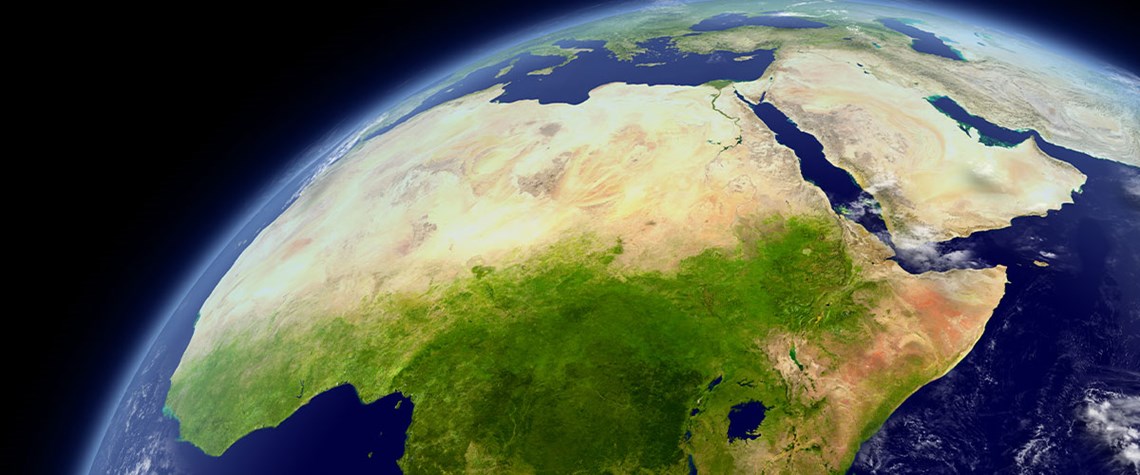
North Africa has ample resources for renewable energy
North Africa picks up pace on renewables
Algeria, Libya and Tunisia are looking to free up fossil fuels for export
Algeria, Libya and Tunisia have installed a total of barely 500MW of solar and wind capacity, despite ample renewable energy resources, but are now attempting to accelerate deployment. Libya—which had just 6MW of renewables onstream at the end of 2021—revised its development strategy last year, after a ceasefire in late 2020 appeared to herald the end of a decade-long civil conflict. The Renewable Energy Authority of Libya (Reaol) unveiled plans to install c.5GW of solar and wind capacity by 2030 through a combination of state and private investment, facilitated by legislative and institutional changes. The shift to renewables to meet domestic demand could unlock fossil fuel resources for ex

Also in this section
12 March 2026
Role of world’s largest carbon cap-and-trade market under scrutiny as war in Iran threatens to drive EU energy costs to unsustainable levels
10 March 2026
Europe urgently needs to bring more projects to FID, as CCS investors warn they might divert capital to faster-growing regions
9 January 2026
A shift in perspective is needed on the carbon challenge, the success of which will determine the speed and extent of emissions cuts and how industries adapt to the new environment
2 January 2026
This year may be a defining one for carbon capture, utilisation and storage in the US, despite the institutional uncertainty