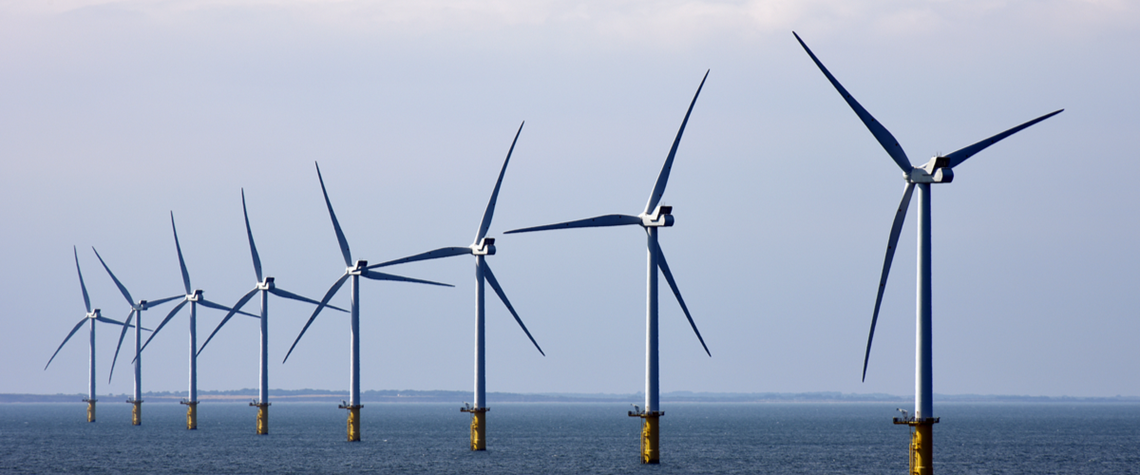
The government has raised its 2030 target for installed offshore wind capacity to 50GW
UK pledges to streamline offshore wind approvals
Government aims for one-year approval process as it ramps up offshore wind targets as part of energy security strategy
The UK government has pledged to cut the time taken to grant approvals to offshore windfarms by more than half as it attempts to accelerate the sector’s expansion over the next decade. Planning reforms will aim to compress project consent timelines to one year, from up to four years currently, the government says in its energy security strategy. The government has raised its 2030 target for installed offshore wind capacity by 10GW to 50GW, including 5GW of floating technology. This represents a 25pc acceleration in the rate of deployment. The renewed push for offshore wind, in which the UK has taken the lead in Europe with capacity of about 11GW and pipeline of 12GW, forms part of the UK’s

Also in this section
9 January 2026
A shift in perspective is needed on the carbon challenge, the success of which will determine the speed and extent of emissions cuts and how industries adapt to the new environment
2 January 2026
This year may be a defining one for carbon capture, utilisation and storage in the US, despite the institutional uncertainty
23 December 2025
Legislative reform in Germany sets the stage for commercial carbon capture and transport at a national level, while the UK has already seen financial close on major CCS clusters
15 December 2025
Net zero is not the problem for the UK’s power system. The real issue is with an outdated market design in desperate need of modernisation