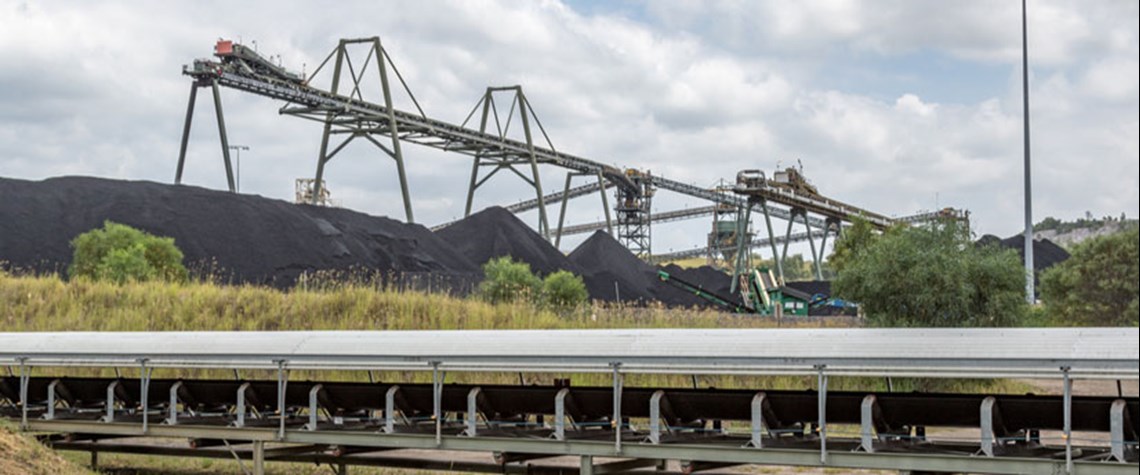
Conveyer at a coal mine
Australian coal-to-hydrogen pilot targets Japanese market
Plan to ship product with world’s first purpose-built liquefied hydrogen carrier
In Victoria’s Latrobe Valley, the heart of Australia’s brown coal mining industry, the backers of the $500mn Hydrogen Energy Supply Chain (HESC) pilot plant aim to show there is a viable carbon-neutral future for the fossil fuel. The plant, which started up in mid-March, gasifies brown coal (lignite) to make hydrogen, which is transported to Victoria’s Hastings port for liquefaction at Australia's first hydrogen liquefaction facility before shipment to Japan. Carbon dioxide (CO2) generated during hydrogen production will be captured, condensed transported and stored in porous sandstone 1.5km beneath the Bass Strait as part of Australia’s CarbonNet project. Latrobe Valley has 65bn t of ligni

Also in this section
1 April 2026
Multiple projects have been scrapped and valuations have nosedived, but the IEA says hydrogen is no passing fad
25 March 2026
The Middle East energy shock has highlighted the value of France’s unique potential to deploy nuclear-powered electrolysers
18 March 2026
The second fossil-fuel price shock in four years can be a much-needed catalyst for investment in the sector
9 March 2026
Hydrogen has not stalled in the UK because the technology does not work. The problem is that the system around it does not yet move at the speed required