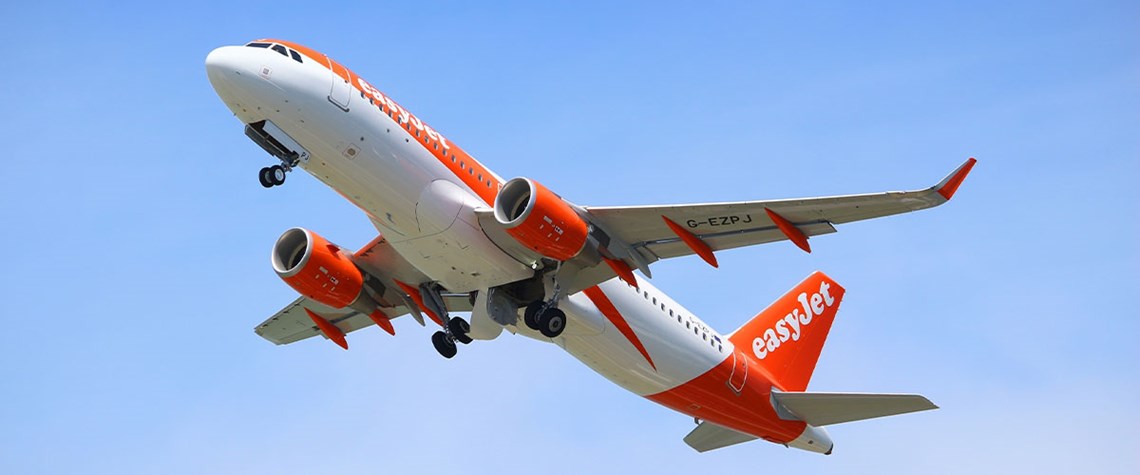
Easyjet is likely to use a number of different fuels to decarbonise
Aviation requires suite of technologies to decarbonise
Sustainable aviation fuel likely to be responsible for bulk of decarbonisation before 2050
The aviation sector will employ a range of technologies to decarbonise, according to panellists at last week’s FT Hydrogen Summit. While smaller aircraft are likely to be powered by battery engines, compressed hydrogen and hydrogen fuel cells, the global fleet of larger planes will likely opt for sustainable aviation fuel (SAF) and, later, liquid hydrogen, according to David Morgan, director of flight operations at airline Easyjet. “There will be a number of different fuels: it is not either/or,” he says. This means developing dual-fuel infrastructure—although this should not be an issue as SAF is effectively a drop-in fuel and a liquid hydrogen network could be built up slowly. “We will see

Also in this section
9 March 2026
Hydrogen has not stalled in the UK because the technology does not work. The problem is that the system around it does not yet move at the speed required
4 March 2026
Turmoil in Middle East reminds nascent clean hydrogen sector that its future prospects are dependent on global energy markets and geopolitics
25 February 2026
Low-carbon hydrogen and ammonia development is advancing much more slowly and unevenly than once expected, with high costs and policy uncertainty thinning investment. Meanwhile, surging energy demand is reinforcing the role of natural gas and LNG as the backbone of the global energy system, panellists at LNG2026 said
18 February 2026
Norwegian energy company has dropped a major hydrogen project and paused its CCS expansion plans as demand fails to materialise