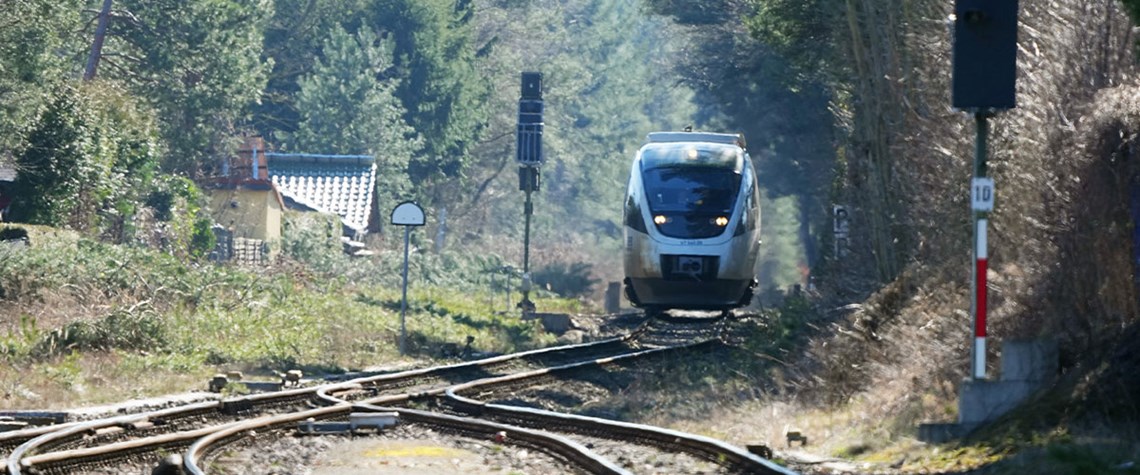
The trains will be run on the RB27 network
Siemens wins first hydrogen train fleet order
Local Berlin rail operator orders seven fuel-cell trains to replace diesel locomotives in December 2024
German technology company Siemens has secured its first order for a fleet of hydrogen-powered trains. It will supply seven of its two-car Mireo Plus H fuel-cell trains to Niederbarnimer Eisenbahn, which operates local passenger services on the RB27 network in the Berlin-Brandenburg region of Germany. The trains, which will replace diesel-powered locomotives, are scheduled for delivery in autumn 2024 and are expected to be in operation by December of that year. The trains will run on locally produced green hydrogen. “Today, travelling by train is by far the most climate-friendly way to travel. We are especially proud that our first order for a fleet of hydrogen-powered trains will also enable

Also in this section
9 March 2026
Hydrogen has not stalled in the UK because the technology does not work. The problem is that the system around it does not yet move at the speed required
4 March 2026
Turmoil in Middle East reminds nascent clean hydrogen sector that its future prospects are dependent on global energy markets and geopolitics
25 February 2026
Low-carbon hydrogen and ammonia development is advancing much more slowly and unevenly than once expected, with high costs and policy uncertainty thinning investment. Meanwhile, surging energy demand is reinforcing the role of natural gas and LNG as the backbone of the global energy system, panellists at LNG2026 said
18 February 2026
Norwegian energy company has dropped a major hydrogen project and paused its CCS expansion plans as demand fails to materialise