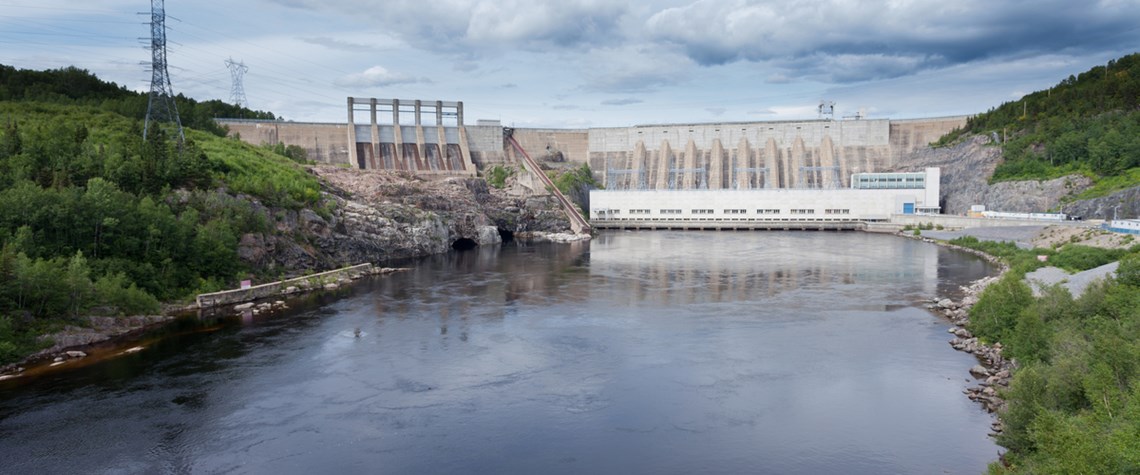
The Outardes river hydropower station in Quebec
Air Liquide completes world’s largest electrolyser
The French firm made a strategic shift to low-carbon hydrogen and is engaged in several large-scale projects around the world
French industrial gases giant Air Liquide completed construction of the world’s largest proton exchange membrane (PEM) electrolyser system to produce green hydrogen in Quebec on 26 January. It was a small but important step in the company’s goal of becoming a leading supplier of low-carbon hydrogen and related technologies to the world. It has committed to provide only low-carbon hydrogen for the mobility market as of 2030. The 20MW PEM electrolyser will be made up of four 5MW modules provided by US-based engine maker Cummins. It is twice as large as the previous record holder in Fukushima, Japan—opened last March—and boosts hydrogen capacity at Air Liquide’s Becancour plant by 50pc. B

Also in this section
9 March 2026
Hydrogen has not stalled in the UK because the technology does not work. The problem is that the system around it does not yet move at the speed required
4 March 2026
Turmoil in Middle East reminds nascent clean hydrogen sector that its future prospects are dependent on global energy markets and geopolitics
25 February 2026
Low-carbon hydrogen and ammonia development is advancing much more slowly and unevenly than once expected, with high costs and policy uncertainty thinning investment. Meanwhile, surging energy demand is reinforcing the role of natural gas and LNG as the backbone of the global energy system, panellists at LNG2026 said
18 February 2026
Norwegian energy company has dropped a major hydrogen project and paused its CCS expansion plans as demand fails to materialise