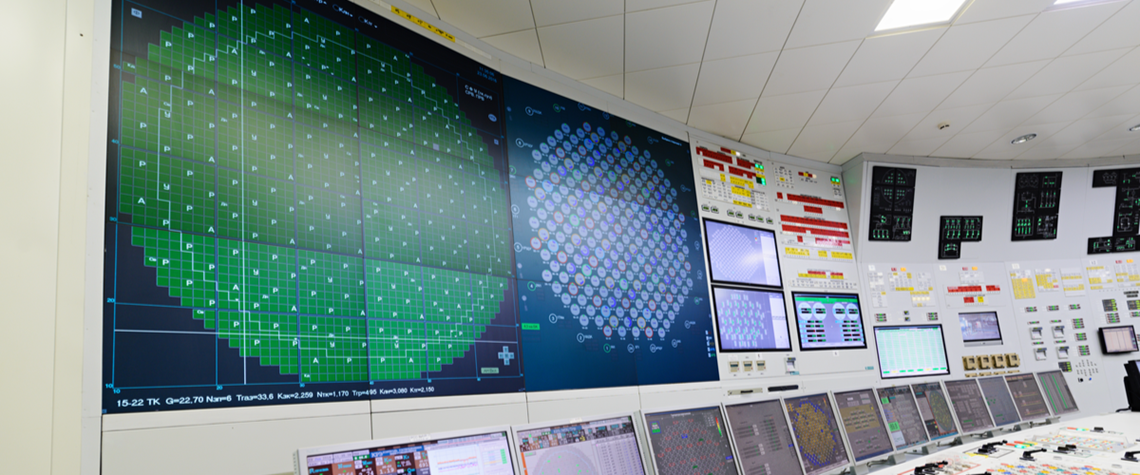
A control room for current nuclear reactor models
SMR nuclear could compete with green hydrogen – Wood Mackenzie
Small modular reactors could help meet climate targets by producing low-carbon hydrogen, consultancy says
Nuclear-produced hydrogen powered by small modular reactors (SMR) has the potential to compete on cost with green hydrogen and could play a crucial role in meeting Paris Agreement climate goals, according to consultancy Wood Mackenzie. “SMR may still be in its infancy, but its potential is endless,” says Prakash Sharma, Asia Pacific head of markets and transitions at Wood Mackenzie. “They can play a role in producing low-carbon hydrogen, which is a cornerstone of almost all deep decarbonisation scenarios.” The levelised cost of electricity generated by a new SMR is upwards of $120/MWh for a typical market in Europe, the US or Japan, Wood Mackenzie says. This compares well with other clean

Also in this section
9 March 2026
Hydrogen has not stalled in the UK because the technology does not work. The problem is that the system around it does not yet move at the speed required
4 March 2026
Turmoil in Middle East reminds nascent clean hydrogen sector that its future prospects are dependent on global energy markets and geopolitics
25 February 2026
Low-carbon hydrogen and ammonia development is advancing much more slowly and unevenly than once expected, with high costs and policy uncertainty thinning investment. Meanwhile, surging energy demand is reinforcing the role of natural gas and LNG as the backbone of the global energy system, panellists at LNG2026 said
18 February 2026
Norwegian energy company has dropped a major hydrogen project and paused its CCS expansion plans as demand fails to materialise