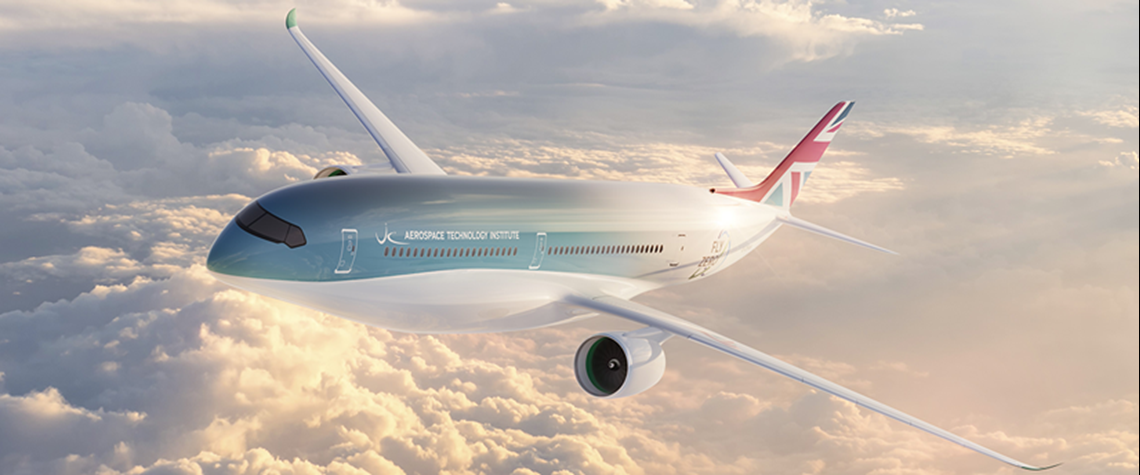
An artist’s concept of the plane
UK’s ATI plans hydrogen passenger plane
Liquid hydrogen is considered to be one of the best options for decarbonising aviation by firms in the sector
The UK Aerospace Technology Institute (ATI) has unveiled plans for an aircraft powered by liquid hydrogen that could fly from London to San Francisco without a refuelling stop. The UK government-funded FlyZero project would operate at the same speed and comfort as today’s aircraft, carrying 279 passengers, according to the plans. “At a time of global focus on tackling climate change, our midsize concept sets out a truly revolutionary vision for the future of global air travel keeping families, businesses and nations connected without the carbon footprint,” says FlyZero project director Chris Gear. Developing a liquid hydrogen solution for a large, long-range aircraft also allows for new infr

Also in this section
9 March 2026
Hydrogen has not stalled in the UK because the technology does not work. The problem is that the system around it does not yet move at the speed required
4 March 2026
Turmoil in Middle East reminds nascent clean hydrogen sector that its future prospects are dependent on global energy markets and geopolitics
25 February 2026
Low-carbon hydrogen and ammonia development is advancing much more slowly and unevenly than once expected, with high costs and policy uncertainty thinning investment. Meanwhile, surging energy demand is reinforcing the role of natural gas and LNG as the backbone of the global energy system, panellists at LNG2026 said
18 February 2026
Norwegian energy company has dropped a major hydrogen project and paused its CCS expansion plans as demand fails to materialise