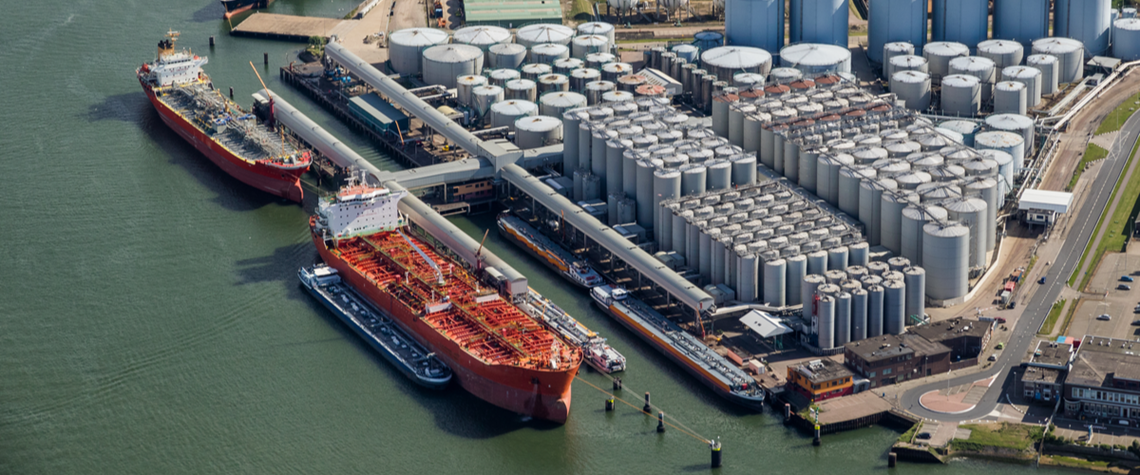
Port of Rotterdam
Shell orders 200MW electrolyser for Rotterdam project
Facility will be powered by the Hollandse Kust offshore windfarm, with first production targeted for 2024
Shell has contracted Thyssenkrupp Uhde Chlorine Engineers to supply a 200MW alkaline electrolysis (AE) facility next to the port of Rotterdam. Thyssenkrupp Uhde Chlorine Engineers—a joint venture between steel firm Thyssenkrupp and technology company Industrie De Nora—will engineer, procure and fabricate the plant based on its 20MW AE module. “We are looking forward to supporting building a major hydrogen hub in central Europe and contributing to Europe’s transition to green energy,” says Christoph Noeres, head of green hydrogen at Thyssenkrupp Uhde Chlorine Engineers. “With our large-scale standard module size, we will further strengthen Shell’s hydrogen strategy.” Shell’s Holland Hydrogen

Also in this section
9 March 2026
Hydrogen has not stalled in the UK because the technology does not work. The problem is that the system around it does not yet move at the speed required
4 March 2026
Turmoil in Middle East reminds nascent clean hydrogen sector that its future prospects are dependent on global energy markets and geopolitics
25 February 2026
Low-carbon hydrogen and ammonia development is advancing much more slowly and unevenly than once expected, with high costs and policy uncertainty thinning investment. Meanwhile, surging energy demand is reinforcing the role of natural gas and LNG as the backbone of the global energy system, panellists at LNG2026 said
18 February 2026
Norwegian energy company has dropped a major hydrogen project and paused its CCS expansion plans as demand fails to materialise