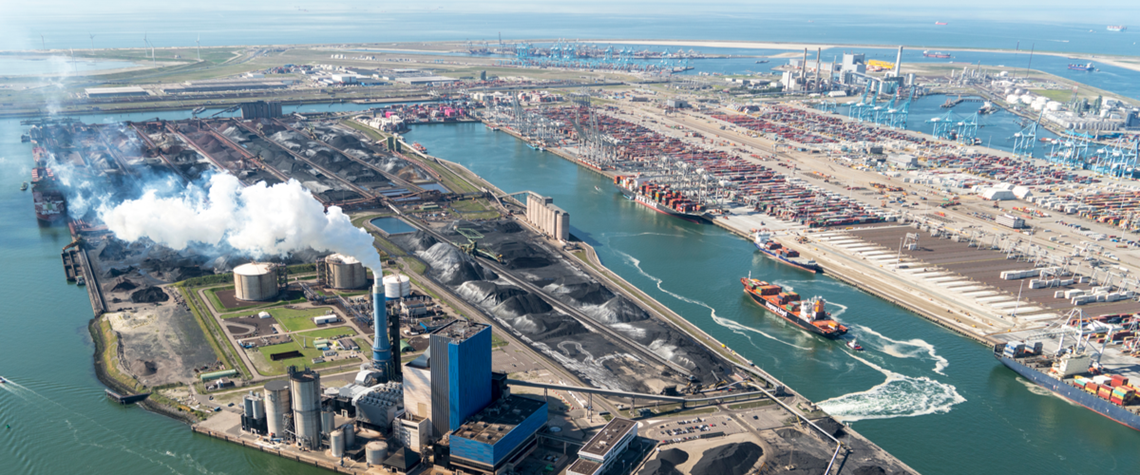
The terminal will be located at the port of Rotterdam’s Maasvlakte extension
Rotterdam ammonia import terminal advances
Gasunie, HES International and Vopak are working on basic design for planned ‘Ace’ terminal
Gas network operator Gasunie, terminal operator HES International and storage firm Vopak have agreed to develop an import terminal for green and blue ammonia at the port of Rotterdam in the Netherlands. The firms have signed an initial agreement to start work on the basic design for the ‘Ace’ terminal this month. The terminal will be situated in the port of Rotterdam’s Maasvlakte extension. Currently there are no plans for an ammonia cracker, although one may be developed in the future at a reserved site alongside the terminal. The terminal will be connected to Gasunie’s planned hydrogen pipeline backbone in the Netherlands. Gasunie aims to bring the pipeline that will form the main part of

Also in this section
9 March 2026
Hydrogen has not stalled in the UK because the technology does not work. The problem is that the system around it does not yet move at the speed required
4 March 2026
Turmoil in Middle East reminds nascent clean hydrogen sector that its future prospects are dependent on global energy markets and geopolitics
25 February 2026
Low-carbon hydrogen and ammonia development is advancing much more slowly and unevenly than once expected, with high costs and policy uncertainty thinning investment. Meanwhile, surging energy demand is reinforcing the role of natural gas and LNG as the backbone of the global energy system, panellists at LNG2026 said
18 February 2026
Norwegian energy company has dropped a major hydrogen project and paused its CCS expansion plans as demand fails to materialise