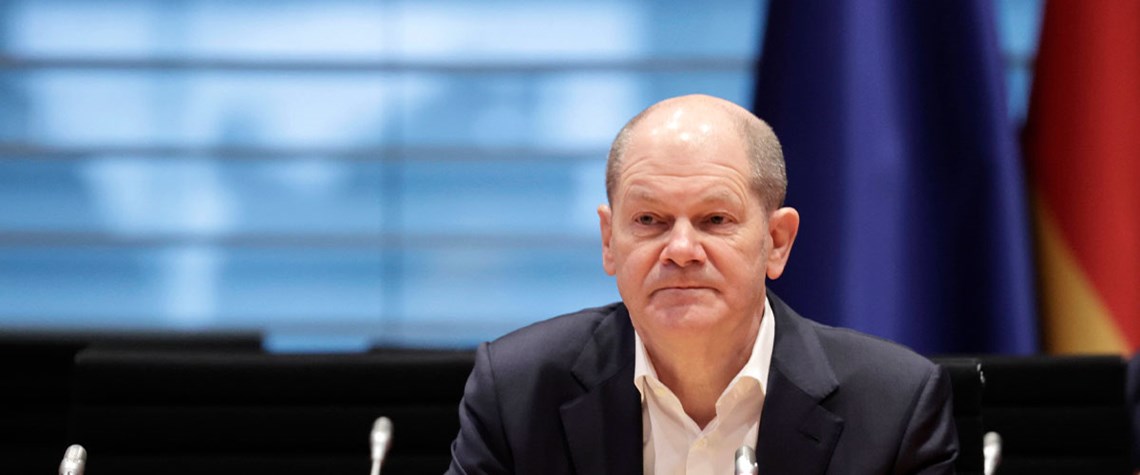
German chancellor Olaf Scholz
Germany plans two LNG terminals as Russia crisis deepens
Government acts to shore up energy supplies with new gas sources but insists policy dovetails with net-zero transition
Germany will “rapidly” build two LNG import terminals and bolster its strategic reserves of both gas and coal as it looks to secure its energy supplies amid the crisis triggered by Russia’s invasion of Ukraine, Chancellor Olaf Scholz said on Sunday. The government said in late February that it would not certify the Nord Stream 2, which runs from Russia directly to Germany, in response to the invasion. Germany imports about 60pc of its natural gas from Russia. “We will change course in order to eliminate our dependence on imports from individual energy suppliers,” Scholz says. “After all, the events of recent days and weeks have shown us that responsible, forward-looking energy policy is not

Also in this section
9 March 2026
Hydrogen has not stalled in the UK because the technology does not work. The problem is that the system around it does not yet move at the speed required
4 March 2026
Turmoil in Middle East reminds nascent clean hydrogen sector that its future prospects are dependent on global energy markets and geopolitics
25 February 2026
Low-carbon hydrogen and ammonia development is advancing much more slowly and unevenly than once expected, with high costs and policy uncertainty thinning investment. Meanwhile, surging energy demand is reinforcing the role of natural gas and LNG as the backbone of the global energy system, panellists at LNG2026 said
18 February 2026
Norwegian energy company has dropped a major hydrogen project and paused its CCS expansion plans as demand fails to materialise