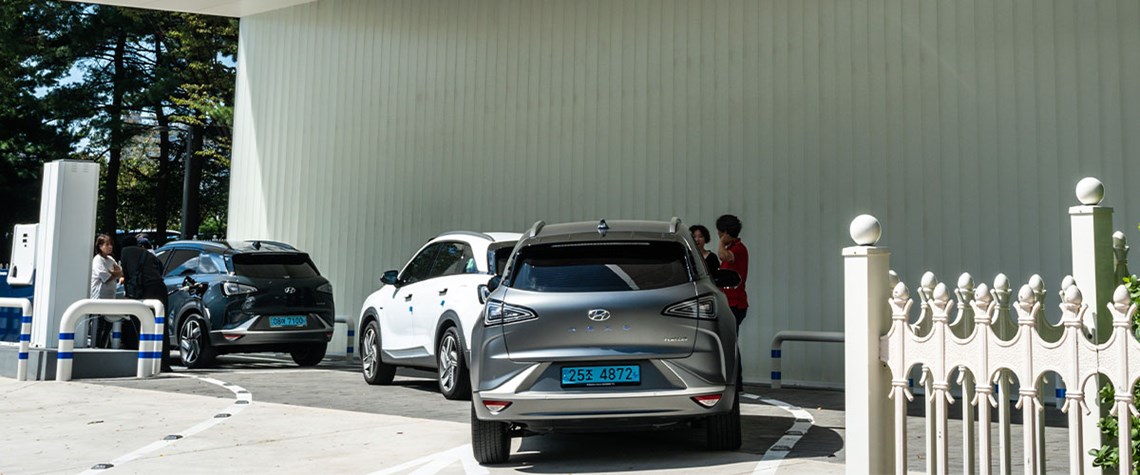
The country has set ambitious targets for hydrogen mobility
South Korea gears up hydrogen strategy
The government has announced new efforts to support hydrogen infrastructure and scale up demand
The South Korean government has announced new measures to support the country’s growing hydrogen sector. In a three-pronged strategy, the government aims to support a global supply chain to meet scaled-up hydrogen demand in the power and mobility sectors, establish a legal framework for distribution infrastructure including refuelling stations, receiving terminals and pipelines and encouraging technological innovation with the aim of commercialisation and overseas export. South Korea’s Ministry of Trade, Industry and Energy (Motie) has set a new target of producing 30,000 hydrogen-powered commercial vehicles by 2030, building 70 liquid hydrogen fuelling stations and ensuring 7.1pc of the cou

Also in this section
9 March 2026
Hydrogen has not stalled in the UK because the technology does not work. The problem is that the system around it does not yet move at the speed required
4 March 2026
Turmoil in Middle East reminds nascent clean hydrogen sector that its future prospects are dependent on global energy markets and geopolitics
25 February 2026
Low-carbon hydrogen and ammonia development is advancing much more slowly and unevenly than once expected, with high costs and policy uncertainty thinning investment. Meanwhile, surging energy demand is reinforcing the role of natural gas and LNG as the backbone of the global energy system, panellists at LNG2026 said
18 February 2026
Norwegian energy company has dropped a major hydrogen project and paused its CCS expansion plans as demand fails to materialise