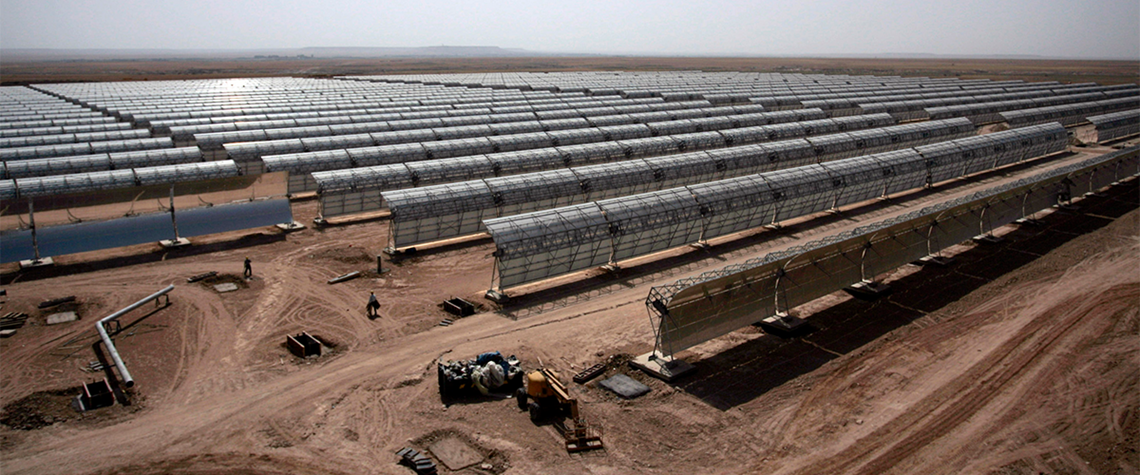
A solar power farm in Morocco
Africa aims high on hydrogen
The continent is looking to significantly boost its production of the fuel for both export and domestic consumption
Most hydrogen projects in Africa are centred on Egypt, Morocco, Namibia and South Africa. These four nations account for more than 70% of active projects in the region, with Egypt holding 38% and the other three 13%, 11% and 9% respectively. Egypt Egypt has ambitious plans to become a green hydrogen/ammonia production hub. The government has announced it intends to capture 5% of the global hydrogen market by 2040. The country’s planning minister has said investment in domestic hydrogen infrastructure is expected to reach $500b by 2030. Most hydrogen projects are being developed in the Suez Canal Economic Zone. Since mid-2022, this area has seen more than $50b in green hydrogen/ammonia projec

Also in this section
9 March 2026
Hydrogen has not stalled in the UK because the technology does not work. The problem is that the system around it does not yet move at the speed required
4 March 2026
Turmoil in Middle East reminds nascent clean hydrogen sector that its future prospects are dependent on global energy markets and geopolitics
25 February 2026
Low-carbon hydrogen and ammonia development is advancing much more slowly and unevenly than once expected, with high costs and policy uncertainty thinning investment. Meanwhile, surging energy demand is reinforcing the role of natural gas and LNG as the backbone of the global energy system, panellists at LNG2026 said
18 February 2026
Norwegian energy company has dropped a major hydrogen project and paused its CCS expansion plans as demand fails to materialise