


Newsletters | Request Trial | Log in | Advertise | Digital Issue   |   Search
  • Upstream
  • Midstream & Downstream
  • Gas & LNG
  • Trading & Markets
  • Corporate & Finance
  • Geopolitics
  • Podcasts
Search
Related Articles
BP’s long stay in Russia
After failed attempts to find a buyer for its stake in Russia’s largest oil producer, BP may be able to avoid the harsh treatment meted out to ExxonMobil and Shell when they exited—and could even restart operations if geopolitical conditions improve
Nigeria bullish about oil recovery
Efforts to restructure and boost investment appear to be working, but doubts remain about the plan to almost double crude production by 2030
Old hands dominate Algeria’s upstream auction
The country’s latest licensing round attracted bids from IOCs and NOCs in a better showing than its last outreach to bidders
Oil majors target Suriname as new exploration frontier
Companies including Shell, TotalEnergies and Chevron are turning to Suriname’s oil potential as South America’s smallest country seeks to replicate the success of neighbouring Guyana
Asia’s potential upstream powerhouse
Petronas-Eni eyes joint venture to prioritise key gas developments, with huge opportunities for growth in Indonesia and a steady Malaysia portfolio
Hydrocarbon Processing Refining Databook 2025: Europe, Russia & CIS
EU net-zero polices have shifted refining investment among member states, while across the region countries and companies continue to adjust to changes in trade flows caused by the war in Ukraine
IOCs undeterred by Middle East conflict
Companies operating offshore assets in the region are unlikely to halt development plans for now, even as hostilities intensify
From the Archives: Baghdad and Beirut
Our look into Petroleum Economist's archives continues with October 1960 coverage of another key moment in the history of oil and gas: the founding of OPEC
Letter on transition: Which future should IOCs be investing in?
In an age of ‘poly crisis’ and ‘radical uncertainty’ the only thing we can say about the future is that it will not be business as usual
Petronas pulls out of South Sudan
Uncertainty persists in South Sudan’s oil sector, potentially threatening the viability of the young nation itself
Europe's IOCs are transitioning to becoming energy companies
Opinion
Netherlands IOCs Energy transition
Karolin Schaps
Amsterdam
27 April 2021
Follow @PetroleumEcon
Forward article link
Share PDF with colleagues

Letter from Amsterdam: Europe’s IOCs first out of the blocks

As investor sentiment shifts, companies that align with the transition have a significant competitive edge

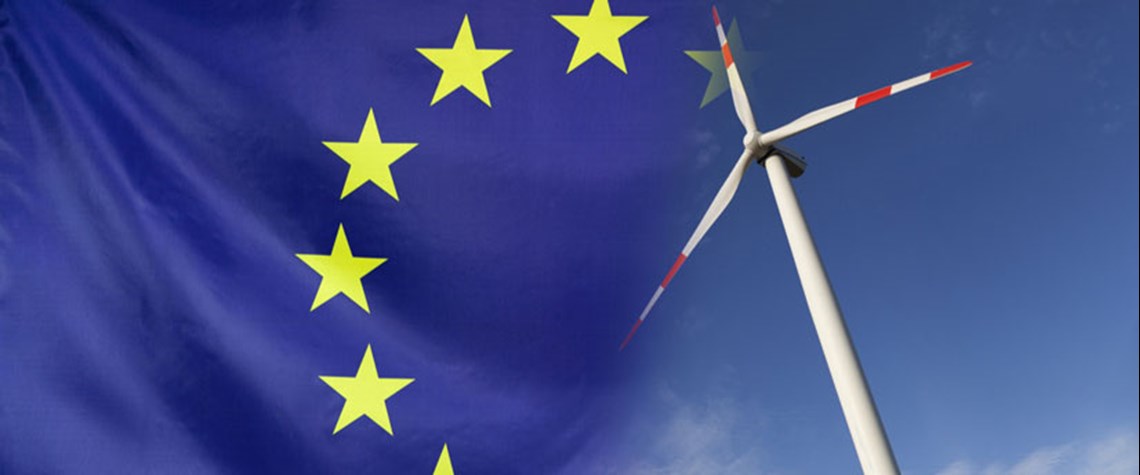
Europe’s biggest oil companies are all making strategic changes to mitigate future climate risks, a move spurred by investor, societal and political pressures that have given the firms a head-start in the energy transition race over competitors from less climate-focused regions. ‘Net zero by 2050’ has been the catchphrase among European IOCs over recent months. All of Europe’s biggest oil companies—BP, Total, Shell, Norway’s Equinor and Italy’s Eni—have committed to getting as close as possible to eliminating their carbon emissions by the middle of this century. Shell, Equinor and Eni have gone as far as including scope three emissions—the carbon released by their customers. North Amer

Also in this section
Germany under pressure to solve Rosneft refinery problem
7 November 2025
The Russian company’s German assets are under Berlin’s management and are exempt from sanctions, for now, but a permanent solution still needs to be found
Lukoil loses its growth prospects
6 November 2025
The Russian firm made a significant attempt to expand overseas over the past two decades but is now divesting its global operations
Letter from Europe: Western retreat raises doubts over climate leadership
Opinion
6 November 2025
After years of pursuing ideologically driven climate leadership, Western powers are now stepping back under mounting political pressure and rising populist opposition—prompting concern essential climate action could be sidelined
Turkmenistan's pipe dream
5 November 2025
Construction of the pipeline in Afghanistan is making tangible progress, but extending it into Pakistan and India remains unrealistic for political reasons

Share PDF with colleagues

COPYRIGHT NOTICE: PDF sharing is permitted internally for Petroleum Economist Gold Members only. Usage of this PDF is restricted by <%= If(IsLoggedIn, User.CompanyName, "")%>’s agreement with Petroleum Economist – exceeding the terms of your licence by forwarding outside of the company or placing on any external network is considered a breach of copyright. Such instances are punishable by fines of up to US$1,500 per infringement
Send

Forward article Link

Send
Sign Up For Our Newsletter
Project Data
Maps
Podcasts
Social Links
Featured Video
Home
  • About us
  • Subscribe
  • Reaching your audience
  • PE Store
  • Terms and conditions
  • Contact us
  • Privacy statement
  • Cookies
  • Sitemap
All material subject to strictly enforced copyright laws © 2025 The Petroleum Economist Ltd
Cookie Settings
;

Search
