


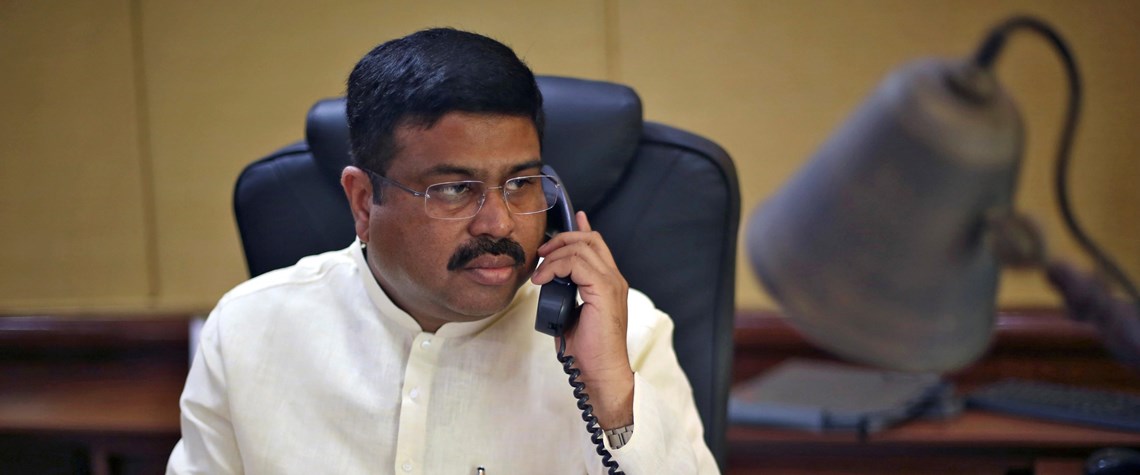
India's Oil Minister Pradhan on a phone interview
India’s ‘blue flame revolution’ gathers pace
Natural gas will play a pivotal role in underpinning the world’s fastest-growing major economy as the government grapples with its energy trilemma—to make its supply secure, affordable and sustainable
During the first term of Narendra Modi’s National Democratic Alliance (NDA) government, the prime minister and his petroleum and natural gas minister, Dharmendra Pradhan, spoke often of wanting to build a gas-based economy in India. Pradhan says he wants to see a “blue flame revolution transform India’s energy landscape”. With the government now in its second term—following the NDA’s landslide victory in last May’s general election—gas remains a policy priority. The aim is to boost the share of natural gas in primary energy supply from 6.2pc to 15pc by 2030. Given that primary energy supply is forecast to grow by 4.2pc/year, according to Pradhan, the scale of this ambition is breathtaking.

Also in this section
13 March 2026
Brussels is again weighing a cap on gas prices amid the Hormuz crisis, but the measure could backfire by deterring the LNG cargoes Europe urgently needs
12 March 2026
Emergency oil stocks provide a last line of defence to oil market shocks, so the IEA’s unprecedented 400m bl release represents something of a double-edged sword
12 March 2026
LPG could rapidly expand access to clean cooking across Africa and prevent hundreds of thousands of deaths from indoor air pollution each year, but infrastructure shortages and regulatory barriers are slowing investment and market growth
11 March 2026
Missiles over Dubai and disruption in Hormuz are testing the emirate’s reputation—and shaking the energy hub at the centre of the Gulf economy


