


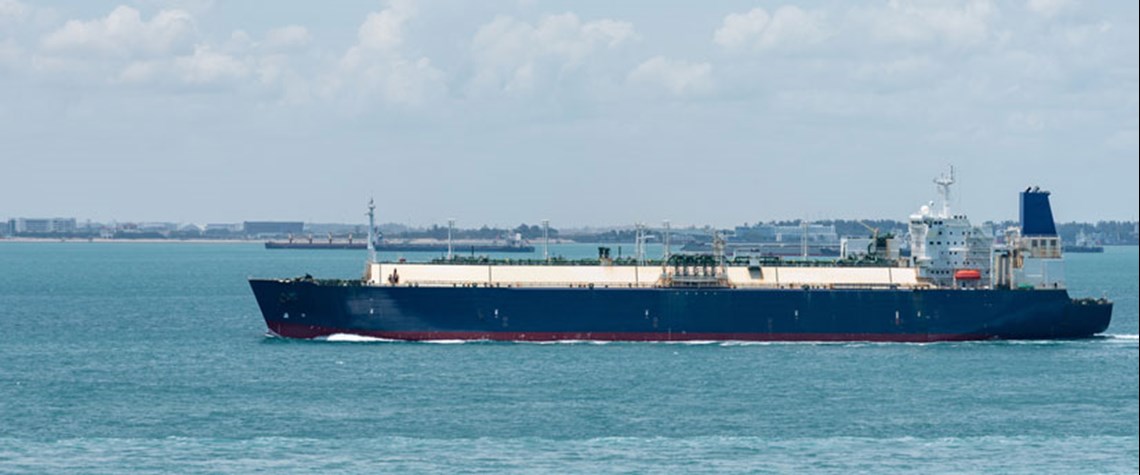
An LNG tanker arriving in Singapore
Liquids give Qatar LNG negative breakeven – Rystad
Existing Ras Laffan trains could cover costs even if LNG prices went to zero
State-owned Mid-East Gulf gas behemoth Qatar Petroleum’s Qatargas 1 Train 1 has an estimated variable cost of LNG production of just $1.60/mn Btu, according to analysis by consultancy Rystad Energy. But, if pre-tax liquids revenue from associated liquids production is considered, it calculates these costs are offset by oil revenues of c.$2.60/mn Btu. And that brings net costs down to -$1/mn Btu. Qatari production is therefore in the money even if LNG prices moved to zero or even into slightly negative territory. In an increasingly flexible global market, such a scenario is unlikely. But the UK NBP gas market, for example, has briefly experienced negative pricing previously, when North Sea as

Also in this section
5 March 2026
Gas is a central pillar of Colombia’s energy system, but declining production poses a significant challenge, and LNG will be increasingly needed as a stopgap. A recent major offshore gas discovery offers hope, but policy improvements are also required, Camilo Morales, secretary general of Naturgas, the Colombian gas association, tells Petroleum Economist
4 March 2026
The continent’s inventories were already depleted before conflict erupted in the Middle East, causing prices to spike ahead of the crucial summer refilling season
4 March 2026
The US president has repeatedly promised to lower gasoline prices, but this ambition conflicts with his parallel aim to increase drilling and could be upended by his war against Iran
4 March 2026
With the Strait of Hormuz effectively closed following US-Israel strikes and Iran’s retaliatory escalation, Fujairah has become the region’s critical pressure release valve—and is now under serious threat


