


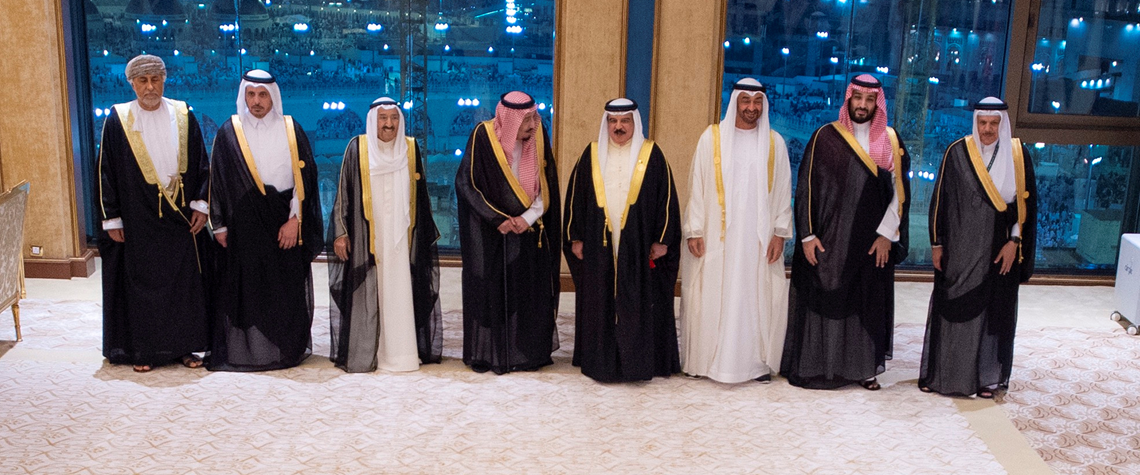
GCC leaders pose for a photo during a summit in Mecca, Saudi Arabia
Gulf states frozen in the headlights
Beset by intra-GCC tension, Gulf states are dithering in the face of the Iran crisis
The fear engendered in Saudi Arabia by the September attacks on its oil facilities at Abqaiq and Khurais is shared by the other five members of the Gulf Cooperation Council (GCC): Bahrain, Kuwait, Oman, Qatar and the United Arab Emirates (UAE). Vital installations within their own borders are now as potentially vulnerable as those in Saudi Arabia. But the GCC is not in sufficiently robust shape to face up to the threats collectively. The GCC, in its 1981 founding charter, made no reference to defence cooperation. But three years later, Gulf leaders approved the creation of a joint military unit, the Peninsula Shield Force. One of its duties is to respond to military aggression against a GCC

Also in this section
13 March 2026
Brussels is again weighing a cap on gas prices amid the Hormuz crisis, but the measure could backfire by deterring the LNG cargoes Europe urgently needs
12 March 2026
Emergency oil stocks provide a last line of defence to oil market shocks, so the IEA’s unprecedented 400m bl release represents something of a double-edged sword
12 March 2026
LPG could rapidly expand access to clean cooking across Africa and prevent hundreds of thousands of deaths from indoor air pollution each year, but infrastructure shortages and regulatory barriers are slowing investment and market growth
11 March 2026
Missiles over Dubai and disruption in Hormuz are testing the emirate’s reputation—and shaking the energy hub at the centre of the Gulf economy


