


Newsletters | Request Trial | Log in | Advertise | Digital Issue   |   Search
  • Upstream
  • Midstream & Downstream
  • Gas & LNG
  • Trading & Markets
  • Corporate & Finance
  • Geopolitics
  • Podcasts
Search
Related Articles
Explainer: Iran’s indispensable energy role
The country’s global energy importance and domestic political fate are interlocked, highlighting its outsized oil and gas powers, and the heightened fallout risk
Letter from the US: The curse of strong energy exports
Rebuilding industry, energy dominance and lower energy costs are key goals that remain at odds in 2026
Venezuela mismanaged its oil, and US shale benefitted
Chavez’s socialist reforms boosted state control but pushed knowledge and capital out of the sector, opening the way for the US shale revolution
Outlook 2006: The North Sea’s next chapter – From backbone to blueprint
The next five years will be critical for the North Sea, and it will be policy not geology that will decide the basin’s future
Outlook 2026: Grand plan for offshore leasing should give boost to US Gulf
As activity in the US Gulf has stagnated at a lower level, the government is taking steps to encourage fresh exploration and bolster field development work
Outlook 2026: The US energy paradox – Efficiency at home, influence abroad
The US’ domestic energy market may be stagnating, but its role in the global energy system looks set to bloom
Outlook 2026: Trump’s LNG diplomacy will likely run into commercial, regulatory reality
The president is aiming for ‘energy dominance’ via LNG sales, largely to Europe, but supply is set to outstrip demand, and EU regulations remain a stumbling block
A tale of two regulatory landscapes: the UK and Norway
The stark contrasts between the UK and Norway demonstrate how policy stability can shape the long-term trajectory of a mature basin
Outlook 2026: US onshore holds steady at sluggish rate as shale stagnates
As contradictory as it might seem, US oil output has continued to grow over the last several years, even as drilling in the shale plays has maintained a slow decline. This improbable dichotomy is a testimony to the industry’s technological prowess
The looming risks of a US-Venezuela war
The Caribbean country’s role in the global oil market is significantly diminished, but disruptions caused by outright conflict would still have implications for US Gulf Coast refineries
Iran US UK
Gerald Butt
23 July 2019
Follow @PetroleumEcon
Forward article link
Share PDF with colleagues

Immediate threat to Gulf oil flow lifted

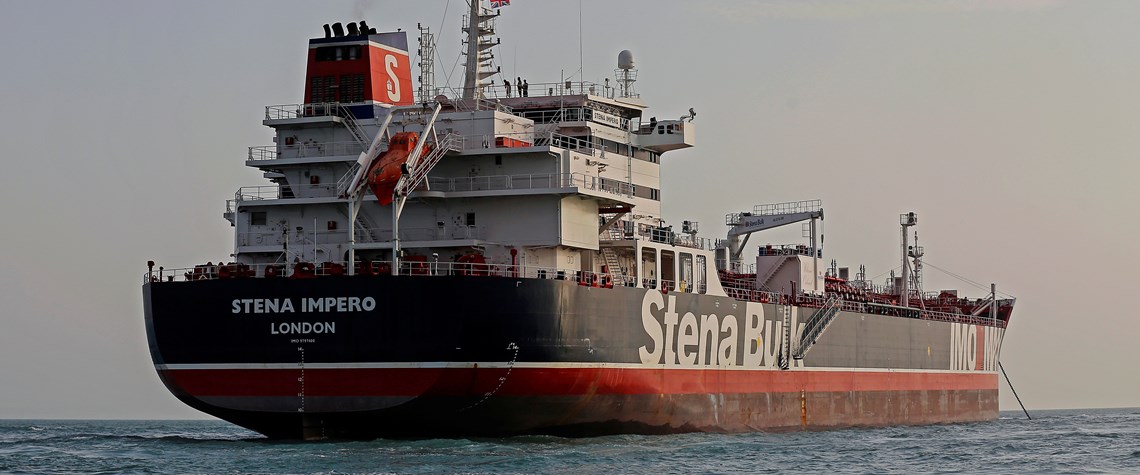
The UK and Iran have shown that they do not want the seizure of a British-flagged oil tanker to be the trigger for an armed conflict

The decision by members of Iran's Islamic Revolutionary Guards Corps to board the Stena Impero off Oman and force it to sail to Bandar Abbas might well have been the spark to ignite a war in the Gulf. In the event, the UK and Iranian governments are showing clearly that they do not want this to happen. The UK's foreign minister, Jeremy Hunt, while describing the seizure of the tanker as an act of piracy, stressed his country's "desire to de-escalate" the crisis. Instead of direct military action to resolve the tanker issue, he proposed working with other European nations to work out a joint strategy to protect ships passing through the Strait of Hormuz. Iran's foreign minister, Mohammad Java

Also in this section
OPEC+ set to strengthen its hand
28 January 2026
The alliance looks to bolster market management credibility by bringing greater clarity and unity to output cuts and producer capacity later in 2026
Indian refiners prove their adaptability
23 January 2026
A strategic pivot away from Russian crude in recent weeks tees up the possibility of improved US-India trade relations
Gas deal keeps Lebanon’s offshore hopes alive
23 January 2026
The signing of a deal with a TotalEnergies-led consortium to explore for gas in a block adjoining Israel’s maritime area may breathe new life into the country’s gas ambitions
Letter from Saudi Arabia: Big oil meets big shovel
Opinion
22 January 2026
As Saudi Arabia pushes mining as a new pillar of its economy, Saudi Aramco is positioning itself at the intersection of hydrocarbons, minerals and industrial policy

Share PDF with colleagues

COPYRIGHT NOTICE: PDF sharing is permitted internally for Petroleum Economist Gold Members only. Usage of this PDF is restricted by <%= If(IsLoggedIn, User.CompanyName, "")%>’s agreement with Petroleum Economist – exceeding the terms of your licence by forwarding outside of the company or placing on any external network is considered a breach of copyright. Such instances are punishable by fines of up to US$1,500 per infringement
Send

Forward article Link

Send
Sign Up For Our Newsletter
Project Data
Maps
Podcasts
Social Links
Featured Video
Home
  • About us
  • Subscribe
  • Reaching your audience
  • PE Store
  • Terms and conditions
  • Contact us
  • Privacy statement
  • Cookies
  • Sitemap
All material subject to strictly enforced copyright laws © 2025 The Petroleum Economist Ltd
Cookie Settings
;

Search
