


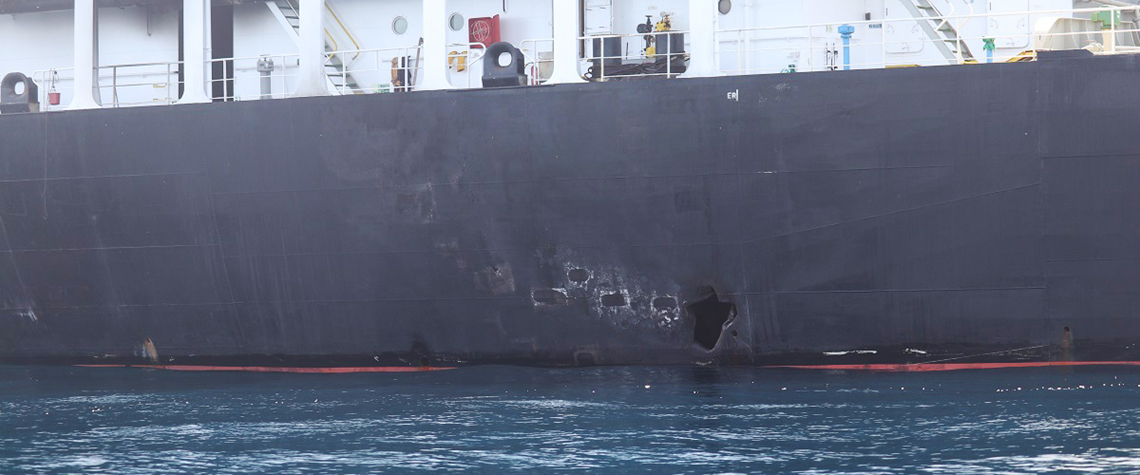
Source: US Department of Defense
Kuwait and Iraq seek to defuse Iran crisis
The states depend of the Strait of Hormuz for their oil exports and vital oil revenue
Sometimes it takes a shared crisis for neighbours who have been at loggerheads for years to put aside their differences. A one-day visit to Iraq by the Emir of Kuwait, Shaikh Sabah al-Ahmad al-Sabah, reflects a gradual thaw in relations over recent years after the trauma of Iraq's invasion of Kuwait in 1990. But, much more, it is an indication that the two states are alarmed by the rising tension in the Gulf over the Iran crisis. They have good reason to be. Both export their crude oil through the Strait of Hormuz and into the Gulf of Oman—where two tankers were recently damaged in attacks blamed on Iran. All Kuwait's exports (around 2mn bl/d) and almost all Iraq's (3.5mn bl/d, with only 100

Also in this section
28 January 2026
The alliance looks to bolster market management credibility by bringing greater clarity and unity to output cuts and producer capacity later in 2026
23 January 2026
A strategic pivot away from Russian crude in recent weeks tees up the possibility of improved US-India trade relations
23 January 2026
The signing of a deal with a TotalEnergies-led consortium to explore for gas in a block adjoining Israel’s maritime area may breathe new life into the country’s gas ambitions
22 January 2026
As Saudi Arabia pushes mining as a new pillar of its economy, Saudi Aramco is positioning itself at the intersection of hydrocarbons, minerals and industrial policy


