


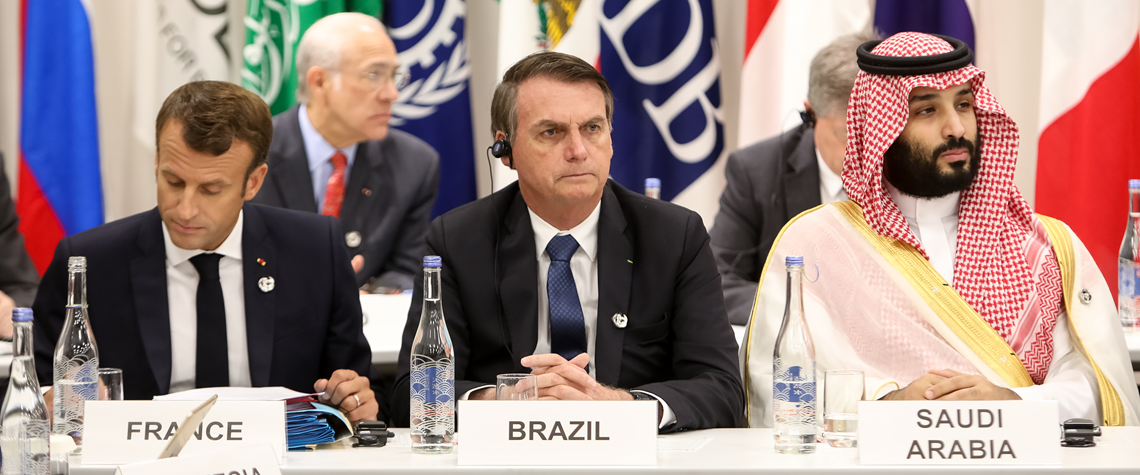
Prince Mohammed (far right) at the 2019 G20 Osaka summit
More bad signs for MbS
Sub-$60/bl Brent, a rising budget deficit, soft foreign direct investment and subdued growth in the non-oil sector all drag on Vision 2030
Saudi Arabia's crown prince Mohammad Bin Salman, or MbS, as he is known, has made his Vision 2030 programme to modernise the Saudi Arabian economy by reducing oil dependency a flagship policy. But recent developments suggest the headwinds it is facing are growing stronger, rather than the promised transformation growing any momentum. Currently, oil and gas sales account for 30pc of Saudi GDP, government consumption and investment— including government stimulus and petrochemical investment—account for around 34pc, while just 36pc is contributed by the private sector. Under Vision 2030, the aim is to raise the share of private non-oil revenues to 65pc by 2030. For that to happen, non-oil priva

Also in this section
5 March 2026
Gas is a central pillar of Colombia’s energy system, but declining production poses a significant challenge, and LNG will be increasingly needed as a stopgap. A recent major offshore gas discovery offers hope, but policy improvements are also required, Camilo Morales, secretary general of Naturgas, the Colombian gas association, tells Petroleum Economist
4 March 2026
The continent’s inventories were already depleted before conflict erupted in the Middle East, causing prices to spike ahead of the crucial summer refilling season
4 March 2026
The US president has repeatedly promised to lower gasoline prices, but this ambition conflicts with his parallel aim to increase drilling and could be upended by his war against Iran
4 March 2026
With the Strait of Hormuz effectively closed following US-Israel strikes and Iran’s retaliatory escalation, Fujairah has become the region’s critical pressure release valve—and is now under serious threat


