


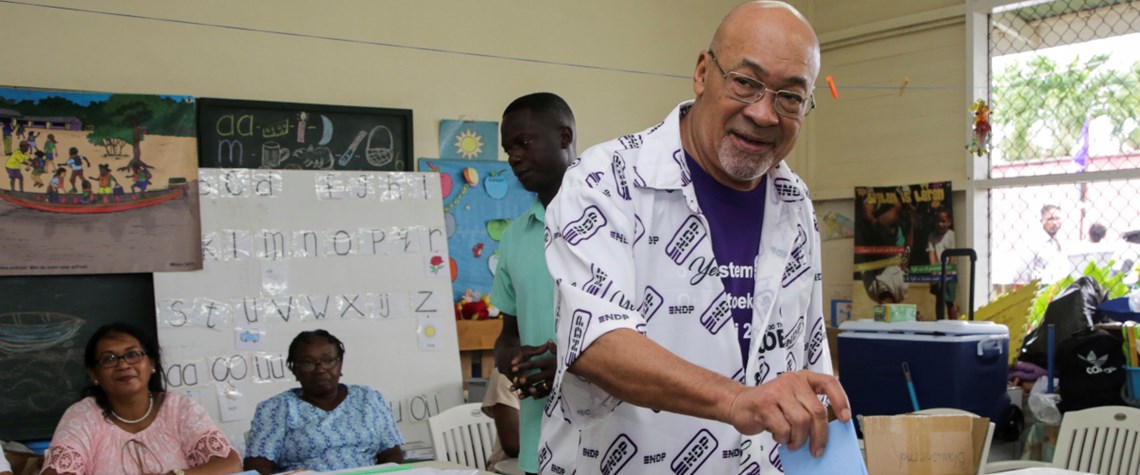
Suriname's president, Desi Bouterse
Suriname’s election setback
Development of the country’s oil sector faces a slowdown in the face of political instability and dire economic conditions
National elections in Suriname were supposed to bring much-needed stability to the country following a string of political scandals and an economy poised to suffer significant recession. The landmark offshore oil discoveries announced by French operator Total in the first quarter offered a rare reprieve from the sense of gloom. But the fallout from the election has highlighted Suriname’s fractious political scene and the potential risks of investing in the country. President Desi Bouterse, who was standing for a third term in office, demanded a recount ahead of the official result, and international observers fear a lengthy dispute. “The risk of political violence and civil unrest is c

Also in this section
5 March 2026
Gas is a central pillar of Colombia’s energy system, but declining production poses a significant challenge, and LNG will be increasingly needed as a stopgap. A recent major offshore gas discovery offers hope, but policy improvements are also required, Camilo Morales, secretary general of Naturgas, the Colombian gas association, tells Petroleum Economist
4 March 2026
The continent’s inventories were already depleted before conflict erupted in the Middle East, causing prices to spike ahead of the crucial summer refilling season
4 March 2026
The US president has repeatedly promised to lower gasoline prices, but this ambition conflicts with his parallel aim to increase drilling and could be upended by his war against Iran
4 March 2026
With the Strait of Hormuz effectively closed following US-Israel strikes and Iran’s retaliatory escalation, Fujairah has become the region’s critical pressure release valve—and is now under serious threat


