



Of all the world’s regions, Africa faces the greatest challenge in securing the investments needed to power its future. While Southern and North Africa attract a significant share of global energy capital, much of Sub-Saharan Africa—home to the majority of the continent’s population—remains under-served, according to the IEA. Despite progress since 2000, roughly 600m people still lack electricity, and over 1b rely on traditional fuels for cooking.
The continent faces the dual challenge of meeting rapidly growing energy demand—expected to rise by 50-60% by 2040—while simultaneously navigating the global imperative to reduce emissions.
For Anibor Kragha, executive secretary of the African Refiners & Distributors Association (ARDA), the solution lies not in a one-size-fits-all global mandate, but a "just, Africa-centric energy transition". This strategy prioritises energy security, economic diversification and the modernisation of downstream infrastructure to ensure the continent captures the full value of its resources.
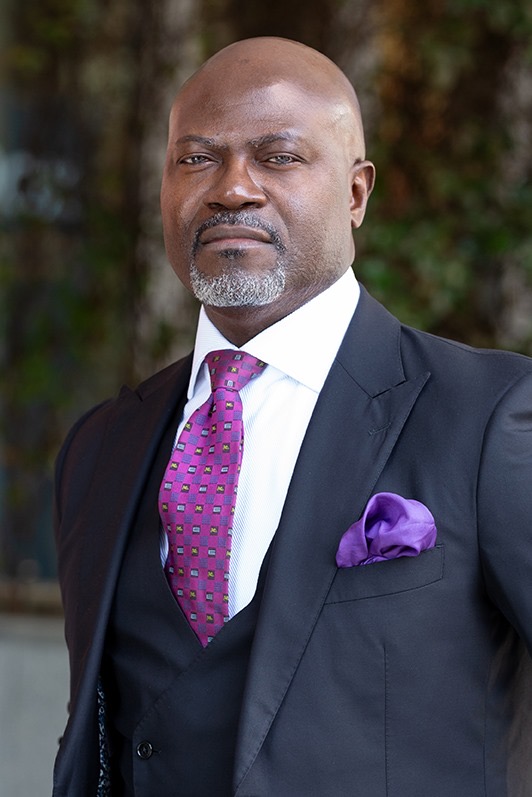
“It’s crucial to balance energy security and the energy transition as we look forward to meet Africa's significantly growing energy demand over the next couple of decades,” he said.
The evolution of African refining
Historically, Africa has been a major exporter of crude oil and heavily reliant on imported refined oil products. Kragha believes the strategic goal for the next decade should be to reverse this trend by shifting towards refining on the continent through the development of integrated energy hubs.
A report from consultants McKinsey in 2025 showed that the region will additional refining capacity equivalent up to six times the size of Nigeria’s Dangote refinery to meet fuel demand over the next two decades. But as well as adding capacity, new refineries must also drive value addition by integrating petrochemical projects and building internal energy value chains.
“We don't want to keep exporting crude and importing refined products,” emphasised Kragha. “We need to ensure that we upgrade our refinery assets to produce cleaner, lower-sulfur fuels and value-added petrochemicals.”
Decarbonising these new refinery assets is a key goal, but will be a multi-stage process requiring a phased implementation of better energy management, biofuel blending, renewable integration and some low-carbon hydrogen deployment. In the medium term, carbon capture technologies may be an option, depending on whether the required levels of infrastructure investment have been made. Effective policy support will be vital to achieve all these goals, according to Kragha.
"We need to ensure that our governments start to implement policies that support biofuel adoption while not adversely impacting land use for food production. And we need significant infrastructure investment to support large-scale carbon capture and hydrogen adoption,” he said.
ARDA is already collaborating with the African Petroleum Producers Organization (APPO) and the African Union to foster a robust intra-African oil and gas market, supporting regional integration and cross-border infrastructure development.
Cleaner cooking fuels
Alongside clean transport, ARDA is campaigning for the adoption of LPG as a clean cooking fuel, with the goal of reaching 60% LPG penetration by 2030. Currently around 80% of people in Sub-Saharan Africa rely on biomass for cooking.
“There are massive health, environmental and socioeconomic benefits for replacing biomass with clean cooking fuels,” noted Kragha.
Switching from biomass to LPG for cooking reduces indoor air pollution, curbs deforestation and lowers carbon emissions. It also alleviates the need to collect firewood, allowing for more productive economic activities such as education.
India and China have accelerated the use of LPG through government subsidies, but many African countries cannot afford to subsidise the fuel in the same way. ARDA is therefore looking at alternative financial mechanisms to underpin fuel-switching to LPG.
“We are advocating for carbon credit finance to be used for LPG projects to really bring down the cost. Currently cleaner cookstoves, which still have the fossil content, can attract carbon credits, but LPG projects do not,” he said.
Consumer finance is also critical. One ARDA member, Paygas, is pioneering an innovative solution in Southern Africa, allowing customers to purchase small, affordable quantities of gas as they need it, rather than paying the high upfront costs of a full cylinder and equipment.
A large scale LPG rollout will also require the development of import facilities.
“Even as we start to build intra-African trade, we have to build LPG import terminals, storage and distribution infrastructure, cylinder manufacturing and so on,” said Kragha.
A tale of three decades
ARDA envisions the transition to cleaner transport and cooking fuels as a "tale of three decades”—a phased approach to investment and technology adoption. The 2020s must see the upgrading of refineries to produce lower-sulfur fuels and an expansion of LPG infrastructure. The 2030s must see a shift toward new transport-focused renewable energies, including the local production and blending of biofuels and sustainable aviation fuel (SAF). And finally, the 2040s must see the development of cleaner primary power sources such as natural gas and renewables, and the introduction of mature technologies like CCS.
Realising this vision requires a massive injection of capital. Information provider S&P Global estimates that Africa needs $277b annually to implement its collective nationally defined contributions to cutting emissions under the Paris Agreement. Meanwhile the continent faces high borrowing costs and volatile currencies—making traditional financing difficult.
The solution lies in blending finance through sustainable instruments like green, social and sustainability-linked bonds.
“We need to really, really aggregate all potential forms of financing,” said Kragha.
Equally important is the harmonisation of regulations to attract large-scale investment. Currently, the continent’s fuel specifications are fragmented. For instance, there are 11 different grades of diesel and 12 grades of gasoline across Africa. This regulatory patchwork stifles the ability to pool projects and scale investments.
ARDA is working with the African Union to adopt harmonised "AFRI-6" (10-ppm sulfur) specifications. Furthermore, it believes, a move towards market-based pricing for fuel products is essential.
Subsidies, while politically popular, can stifle competition and divert government funds from other priorities, according to Kragha. Removing them incentivises the private sector to invest in critical storage and distribution infrastructure, such as pipelines and rail, to alleviate supply chain bottlenecks.
“When you have market pricing, this will drive competition at lower cost,” said Kragha.
In turn, these infrastructure investments will help to ensure that markets function better, creating a virtuous circle of improvement.
“Rail investments, pipelines, storage terminals, larger ports—these are all important so that we move away from using trucks, mainly in urban areas, towards having large-scale and efficient supply chains for delivery,” said Kragha.
Energy: the next generation
To maximise the impact of these finance, policy and infrastructure reforms, the African downstream sector must also prioritise an aggressive digitalisation drive, according to Kragha.
“Using artificial intelligence, big data analytics can transform data into actionable insights and help us African downstream operators function more efficiently, safely and profitably—which will, of course, enhance the future growth of operations,” he said.
However, technology alone is insufficient without the human capital to manage it. There is an urgent need to update university curriculums to integrate low-carbon digital operations and renewable energy technologies.
Initiatives like the Nigerian Content Development Board’s digitalisation programme and partnerships with the African Energy Chamber are already leading the way in mentoring the next generation of energy leaders.
And ARDA itself has been working with various universities and institutions in the Côte d’Ivoire and other locations to develop educational programs to support the energy transition.
“We have an ARDA training school here promoting knowledge transfer, and ultimately building capacity so that our future leaders understand not just molecules, but also data, finance and sustainability,” concluded Kragha.
For ARDA, a just Africa-centric transition is about more than lowering emissions—it is about securing affordable energy access, building local value chains, modernising infrastructure and financing a cleaner downstream future powered by enabling regulations, technological innovation and African human capital.



Comments