


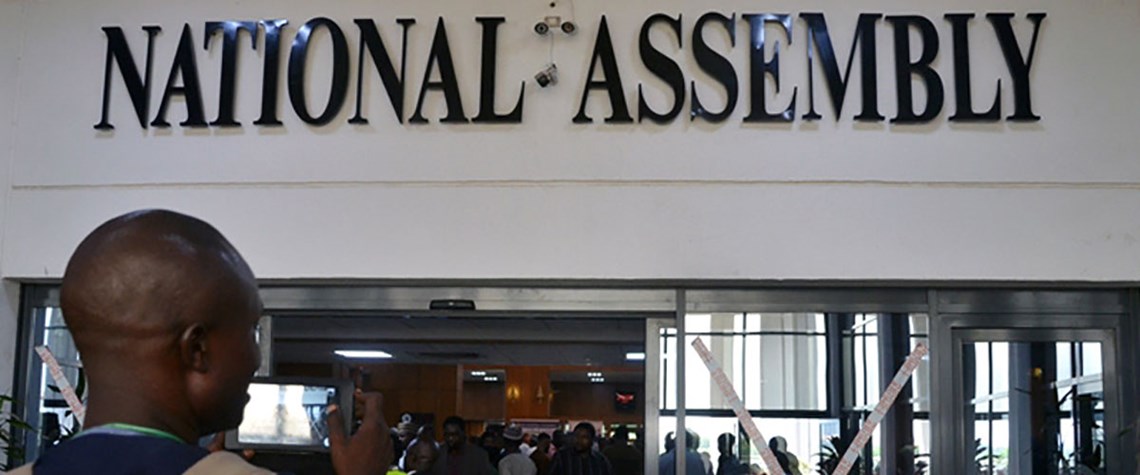
A man stands at the entrance of the National Assembly in Abuja
Nigeria’s PIB inches towards law
The Petroleum Industry Bill reached an important milestone at the start of July
Nigeria's National Assembly has finally passed the country’s long-delayed Petroleum Industry Bill (PIB), but the body’s two legislative chambers each approved different—but mostly overlapping—versions, amid controversy over the allocation of royalties to local communities. The House of Representatives backs a 5pc allocation, and the Senate 3pc. The two different versions of the PIB now must be reconciled before the finalised bill can be sent to President Buhari for approval and signing into law, and it is unclear how long that process might take. “This year might, after all, be the year that the PIB becomes law”—Mansur Mohammed, Wood Mackenzie The National Assembly breaks for the su

Also in this section
6 March 2026
The March 2026 issue of Petroleum Economist is out now!
6 March 2026
After Europe’s rapid buildout of floating LNG import capacity, Exmar CEO Carl-Antoine Saverys says future growth in floating gas infrastructure will increasingly be driven by developing markets as lower prices, rising energy demand and the need to replace coal unlock new opportunities for unconventional and tailor-made solutions
5 March 2026
Gas is a central pillar of Colombia’s energy system, but declining production poses a significant challenge, and LNG will be increasingly needed as a stopgap. A recent major offshore gas discovery offers hope, but policy improvements are also required, Camilo Morales, secretary general of Naturgas, the Colombian gas association, tells Petroleum Economist
4 March 2026
The continent’s inventories were already depleted before conflict erupted in the Middle East, causing prices to spike ahead of the crucial summer refilling season


