


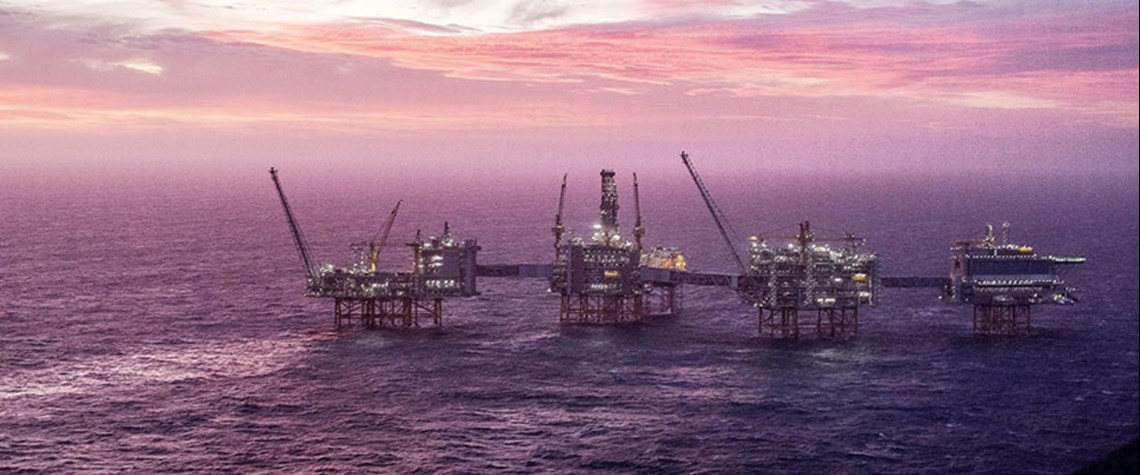
The Johan Sverdrup oilfield
Pureplay producer makes case for scope three absolution
NCS operator Lundin is touting its ‘green’ Johan Sverdrup barrels. Its CEO argues that represents it doing its bit
Swedish-headquartered independent Lundin Energy will use carbon offsets to ensure future deliveries from its Johan Sverdrup field on the Norwegian continental shelf (NCS) are net-zero on scope one and two emissions from production to delivery to buyer. And CEO Nick Walker tells the FT Global Commodities Summit that any further emissions across the lifecycle of these barrels are out of Lundin’s control and should be the responsibility of wherever in the chain they occur. It remains to be seen if such an attitude will prove acceptable to public and investor opinion as we move to a lower-carbon future. Johan Sverdrup already emits a globally low 0.45kg CO2e/bl oe for full life-of-field emission

Also in this section
13 March 2026
Brussels is again weighing a cap on gas prices amid the Hormuz crisis, but the measure could backfire by deterring the LNG cargoes Europe urgently needs
12 March 2026
Emergency oil stocks provide a last line of defence to oil market shocks, so the IEA’s unprecedented 400m bl release represents something of a double-edged sword
12 March 2026
LPG could rapidly expand access to clean cooking across Africa and prevent hundreds of thousands of deaths from indoor air pollution each year, but infrastructure shortages and regulatory barriers are slowing investment and market growth
11 March 2026
Missiles over Dubai and disruption in Hormuz are testing the emirate’s reputation—and shaking the energy hub at the centre of the Gulf economy


