


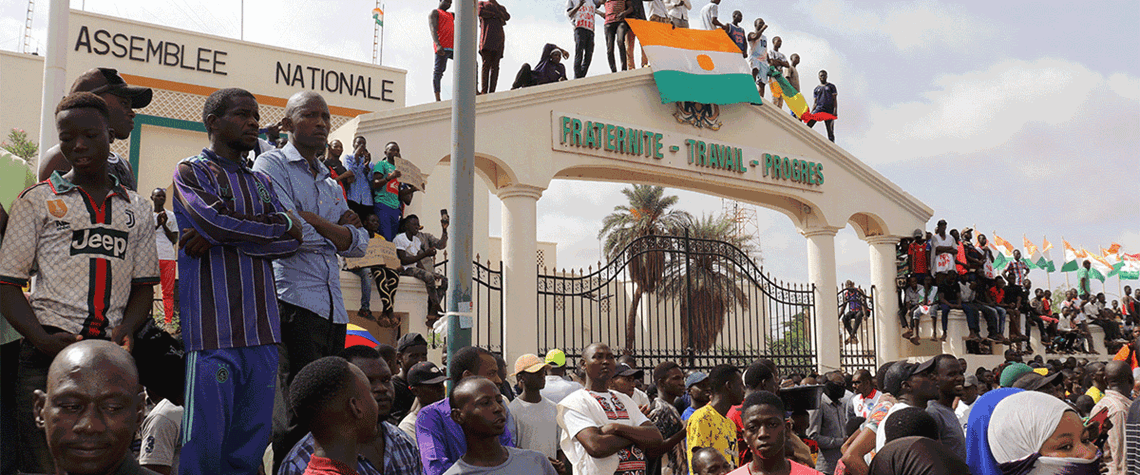
Pro-coup demonstration in Niger
Arc of instability threatens Sahel’s upstream, pipeline ambitions
Coups and geopolitical rivalries complicate energy projects in the expansive region
The Sahel is an extensive, semi-arid zone that spans the African continent south of the Sahara from the Atlantic to the Red Sea coasts. The region’s countries are poor and have been historically isolated, but growing instability in the past few years—most recently with the coup in Niger—demonstrate the Sahel’s geopolitical importance for the competing global powers of the US, Europe, China and Russia. With IOCs and oil and gas projects already impacted by ongoing events in the Sahel, Petroleum Economist looks at what the zone’s precarity might mean for the sector. Amid the panoply of armed insurgents, Islamist groups and smugglers active in the region, there is also mounting ethnic violence

Also in this section
13 March 2026
Brussels is again weighing a cap on gas prices amid the Hormuz crisis, but the measure could backfire by deterring the LNG cargoes Europe urgently needs
12 March 2026
Emergency oil stocks provide a last line of defence to oil market shocks, so the IEA’s unprecedented 400m bl release represents something of a double-edged sword
12 March 2026
LPG could rapidly expand access to clean cooking across Africa and prevent hundreds of thousands of deaths from indoor air pollution each year, but infrastructure shortages and regulatory barriers are slowing investment and market growth
11 March 2026
Missiles over Dubai and disruption in Hormuz are testing the emirate’s reputation—and shaking the energy hub at the centre of the Gulf economy


