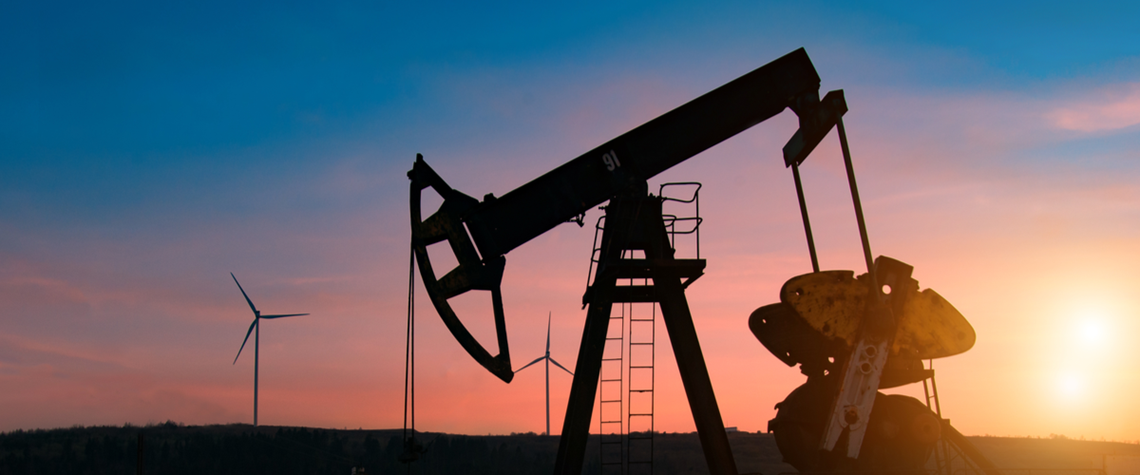
Oil majors are adopting various strategies for the energy transition
Outlook 2022: The future of oil majors in the energy transition
The big oil and gas companies are faced with the prospect of losing a large part of their market as the world transitions away from fossil fuels. Can they carve out a positive role for themselves?
Oil supply will increase by 6pc by 2030 under stated government policies, but decline by 27pc in a scenario leading to net zero by 2050, according to the IEA. For gas, the figures are plus 10pc and minus 9pc. That is a wide range of uncertainty. And stated government policies would require an investment of nearly $700bn/yr in upstream oil from 2030—well above current levels—whereas on the net-zero-by-2050 trajectory there will be no need for investment in new fields. With reasonable optimism about global progress in converting to clean energy, a tipping point will eventually occur when prices will decline closer to the production costs of the lowest-cost fields, mainly in Opec countries. Tha

Also in this section
12 March 2026
Role of world’s largest carbon cap-and-trade market under scrutiny as war in Iran threatens to drive EU energy costs to unsustainable levels
10 March 2026
Europe urgently needs to bring more projects to FID, as CCS investors warn they might divert capital to faster-growing regions
9 January 2026
A shift in perspective is needed on the carbon challenge, the success of which will determine the speed and extent of emissions cuts and how industries adapt to the new environment
2 January 2026
This year may be a defining one for carbon capture, utilisation and storage in the US, despite the institutional uncertainty