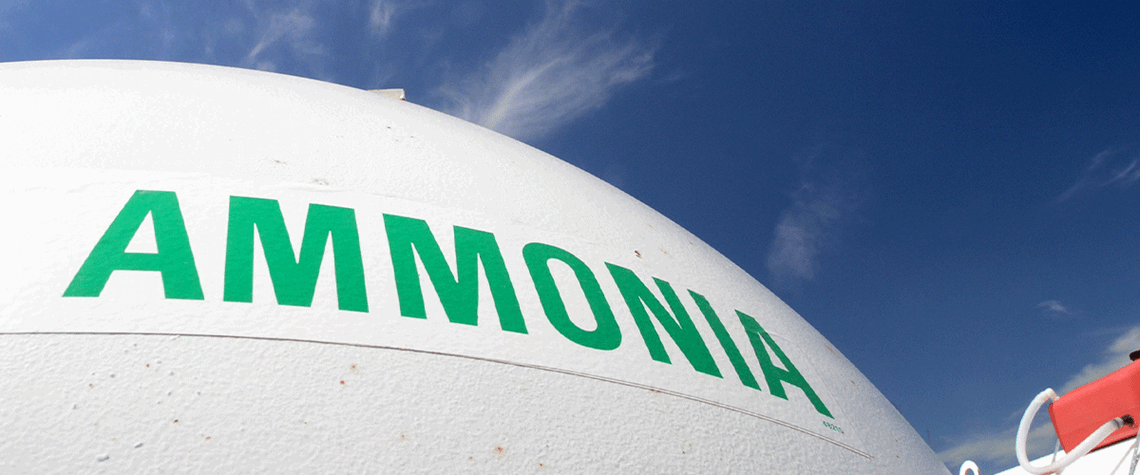
Ammonia storage must be increased alongside import capacity
Europe’s ammonia import plans need FIDs fast
Quicker action will be required for the EU to hit its ambitious import targets
Europe is planning a large number of new ammonia terminals to facilitate seaborne imports of green hydrogen, but FIDs will be needed quickly for the continent to meet its ambitious 2030 goals. The EU’s RepowerEU targets of 10mn t/yr of hydrogen imports by 2030 includes 4mn t/yr of ‘hydrogen as ammonia’—equivalent to 22.5mn t/yr of actual ammonia imports, or 30mn t/yr if reconversion losses are accounted for, according to Gas for Climate, an association of European gas grid operators. Such a target would require a big increase in import capacity. The EU imported just 4mn t/yr of ammonia in 2020, accounting for one-fifth of global trade. 30mn t/yr – Ammonia imports required to hit Repowe

Also in this section
9 March 2026
Hydrogen has not stalled in the UK because the technology does not work. The problem is that the system around it does not yet move at the speed required
4 March 2026
Turmoil in Middle East reminds nascent clean hydrogen sector that its future prospects are dependent on global energy markets and geopolitics
25 February 2026
Low-carbon hydrogen and ammonia development is advancing much more slowly and unevenly than once expected, with high costs and policy uncertainty thinning investment. Meanwhile, surging energy demand is reinforcing the role of natural gas and LNG as the backbone of the global energy system, panellists at LNG2026 said
18 February 2026
Norwegian energy company has dropped a major hydrogen project and paused its CCS expansion plans as demand fails to materialise