



Through operating companies under its energy pillar, including Lamprell, Algihaz Marine Contractors (AMC) and Enshore Subsea, the group services a number of sectors—primarily the oil and gas sector in the Middle East and the renewable sector in the UK and Europe.
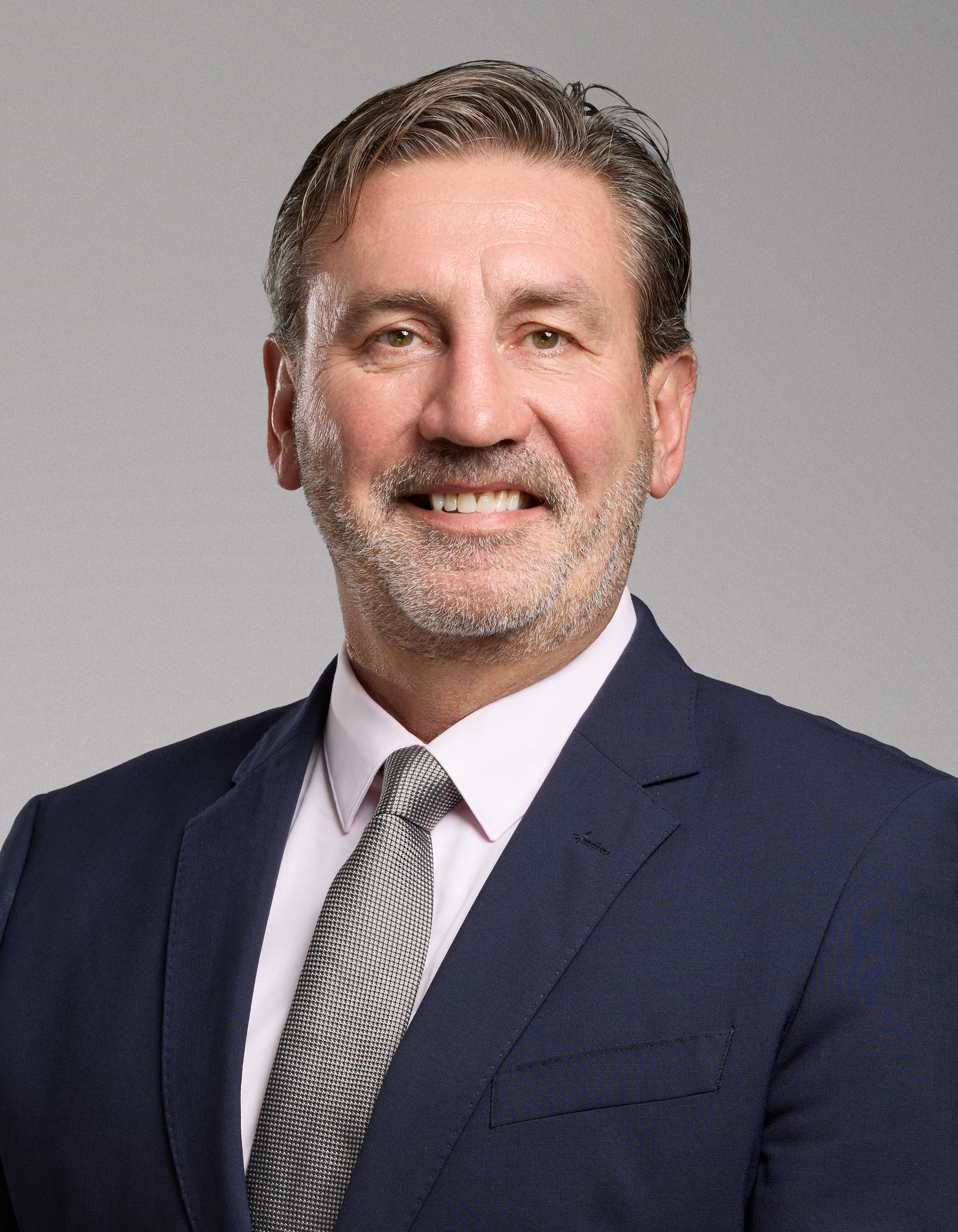
“We want to work with both sectors to ensure that the world has reliable and sustainable energy, whether that's through oil and gas or whether it's through renewables,” said Lamprell CEO Ian Prescott. “There is a transition happening, and we are here to support both parts of that transition.”
In the Middle East, Lamprell designs, fabricates and installs offshore structures for some of the region’s largest oil and gas producers such as Saudi Aramco and ADNOC. It also has an onshore oil & gas division, which provides turnkey EPC solutions for upstream and downstream oil and gas processing facilities.
In the UK and Europe, Lamprell fabricates transition pieces that connect the foundations of offshore wind turbines to the turbines themselves. The firm is currently working on two contracts to supply 92 transition pieces to each of the Vanguard West and Vanguard East off-shore wind farms based in Norfolk, UK, on behalf of RWE.
Enshore Subsea—which provides specialised seabed intervention and cable installation services for offshore projects—has operations in sub-Saharan Africa, while AMC, a marine contractor providing offshore transport and installation services, is working in India, Southeast Asia and the Middle East.
“All these various elements of the Algihaz Energy Group are complementary and synergistic in how we work and operate together,” said Prescott.
Overall, Algihaz Energy Holding’s pipeline of projects exceeds $70b, providing the company with sectoral and geographic revenue diversification. Lamprell represents the largest portion of this pipeline across the energy portfolio.
Synergy strategy
Examples of these synergies are widespread. Algihaz formed AMC when Lamprell needed a transport and installation capability to service its contract with Saudi Aramco.
“They bought a very significant vessel, the ‘Seven Champion', which is now operating for us in the Gulf,” said Prescott.
Enshore brings specialist subsea and cable installation expertise, which complements Lamprell’s capabilities, and together, Lamprell and Enshore are actively exploring opportunities to deliver integrated Offshore Transmission Owner wrap solutions for renewable energy projects. And Algihaz itself has been vital for Lamprell in securing long-term contracts with major oil companies in the Gulf region.
Long-term agreements have been a central part of Lamprell’s strategy in Saudi Arabia, but a key element of the company’s turnaround was a renewed and disciplined focus on the Aramco LTA framework following its acquisition by Algihaz in 2022. While Lamprell secured two awards following its entry into the LTA programme in 2018, the strategic backing, long-term investment and regional insight provided by Algihaz enabled a step-change in the Company’s success under the LTA framework. As a result, Lamprell has secured seven LTA awards since the acquisition, firmly re-establishing its position as one of six active and approved contractors competing for $10-20b of work offered annually by Saudi Aramco to expand oil and gas fields and maintain and grow production.
“Undoubtedly, having Algihaz as our owner has been a major factor in our success,” said Prescott. “Algihaz brought with it a significant depth of experienced capability, giving Lamprell the horsepower not only to win larger projects under the LTA framework, but also to execute them successfully.”
Since then, things have gone from strength to strength, and Lamprell now has an Aramco backlog of over $2b.
The firm is building similarly strong relationships in the renewable sector.
“There's probably 40-plus developers across Europe and the UK, and I'm very pleased to say we've got really good relationships with many, if not the vast majority, of those clients,” he said.
Execution excellence in a high-pressure environment
Key to executing on these contracts has been achieving a high level of operational capability.
“When I joined just under three years ago, we took a hard look at our operational capability,” said Prescott. “We have a lot of long-serving employees—and that institutional knowledge is invaluable—but we also needed to add fresh capability.”
The firm brought in a new chief operating officer, a new supply chain head and a new head of engineering, all with the goal of driving improved operational capability.
Another priority was strengthening risk management. External specialists were brought in, and new processes were embedded across the organisation. The regime is now fully integrated and has improved risk management company-wide.
A third priority has been digitalisation, which Algihaz has driven across the group. Lamprell has its own internal digitalisation unit, and the firm regularly develops digital twins of projects for clients such as Aramco. Other initiatives include AI-enabled safety monitoring in fabrication yards and advanced recruitment applications capable of screening thousands of CVs in minutes.
“There’s huge opportunity in digital, particularly in our arena,” said Prescott.
Working with established clients under long-term contract agreements also makes it easier for Lamprell to execute its projects successfully, Prescott noted.
“It really does make life a lot easier when the people you are serving are very experienced and mature in how they deliver projects,” he said.
Local content and Saudi talent development
Local capability development is an important strategic pillar for Lamprell. As a Saudi-owned group, Algihaz approaches In-Kingdom Total Value Add (IKTVA) not as a compliance exercise, but as a core business principle. The IKTVA program aims to boost local content, develop domestic supply chains and increase employment by encouraging companies to invest and operate within Saudi Arabia.
This work takes many forms, including material purchasing, work execution and hiring local personnel. Lamprell owns 20% of a fabrication facility in the Kingdom called International Maritime Industries (IMI). This facility is world-scale and the largest in the Middle East, totalling 2 million square meters. It is also expanding its office in Al-Khobar, enabling it to increase its local employment footprint, and the firm has a local intern programme, taking on graduates from Saudi Arabia’s universities.
“We do this because our owners genuinely believe in increasing local content for the benefit of the Kingdom,” Prescott added.
A measured path forward
The picture that emerges is one of measured ambition. Algihaz and Lamprell are not betting on a single energy future—they are building optionality, capability and resilience across markets and technologies.
For CEOs navigating the same transition pressures, the message is clear: energy security and energy transition are not opposing goals—they are parallel responsibilities.
“There’s clearly a huge shift underway in the energy sector,” said Prescott. “We are here to support all the component parts of that transition as best we can.”



Comments