


Newsletters | Request Trial | Log in | Advertise | Digital Issue   |   Search
  • Upstream
  • Midstream & Downstream
  • Gas & LNG
  • Trading & Markets
  • Corporate & Finance
  • Geopolitics
  • Podcasts
Search
Related Articles
China’s secure energy transition
Alongside a rapid continued build-out of renewables, China’s latest five-year plan stresses the value of domestic hydrocarbon production for energy security and calls for increased Russian gas imports
China’s new oil position
OPEC, upstream investors and refiners all face strategic shifts now the Asian behemoth is no longer the main engine of global oil demand growth
Explainer: Inside China’s crude oil stockpiling black box
Energy security continues to evolve as a strategic priority amid growing geopolitical tensions highlighted by increased volumes, a new energy law and persistent secrecy
Letter from London: Oil’s golden triangle
The interplay between OPEC+, China and the US will define oil markets throughout 2026
The curious case of oil-on-water
The market is facing being drowned in excess crude, but one caveat is that a large chunk is due to buyers reluctant to snap up sanctioned barrels
China’s oil plan comes together
The country’s rapid output growth is an example that other producers could learn from
China seizes oil security opportunity
A combination of geopolitical uncertainty and OPEC+ barrels has driven a renewed focus on building strategic oil stocks despite flagging demand
Arctic LNG comes in from the cold
Beijing now appears prepared to accept discounted Russian LNG, even at the cost of heightened sanctions risk
China’s role as oil buffer stock manager
The country’s intervention in global oil markets to stabilise prices could last well into 2026
Power of Siberia 2: Deal or no deal?
There is a good strategic case for China to sign a deal for gas supplies via the proposed Power of Siberia 2 pipeline, but Beijing’s concerns around over-dependence on a single supplier and desire to drive down the price make it relatively unlikely a contract will be finalised this year
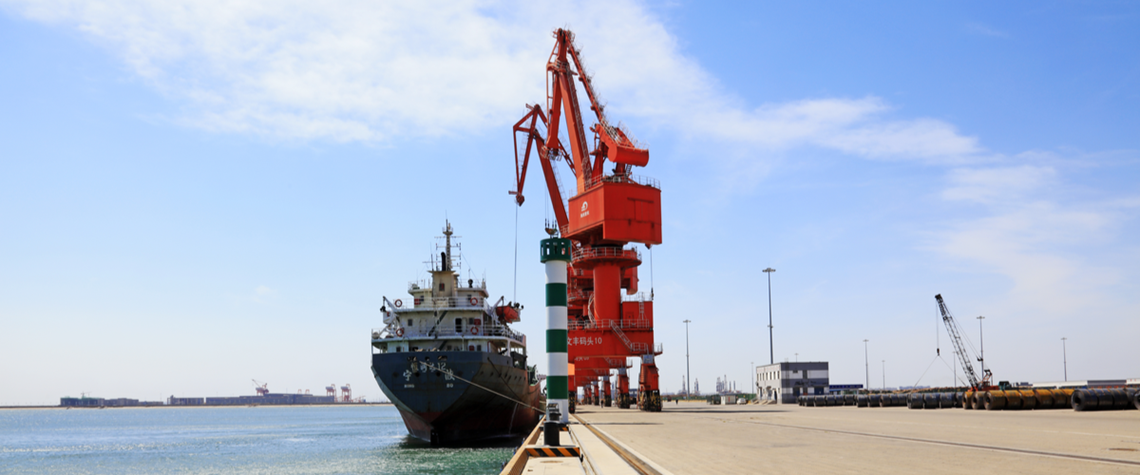
Tangshan LNG terminal at the port of Caofeidian will expand capacity
Petrochina China
Peter Ramsay
27 August 2021
Follow @PetroleumEcon
Forward article link
Share PDF with colleagues

Petrochina targets two LNG terminal startups in H2

The state-controlled Chinese firm is boosting import capacity as domestic demand continues to rise

Petrochina, one of China’s so-called ‘big three’ energy firms, will put the Tangshan LNG 3 and Jiangsu LNG 3 projects into operation in the second half of this year, as well as speeding up the construction of branch pipelines and other gas infrastructure. The firm boosted domestic gas production in the first half of 2021, but Chinese gas demand continues to rise at accelerated rates. The Tangshan LNG terminal is situated in the port of Caofeidian in northeast China’s Hubei province. Its third phase will lift LNG import capacity from 6.5mn t/yr to 10mn t/yr. The Jiangsu LNG terminal sits on an artificial island offshore of the city of Rudong, just north of Shanghai on China’s east coast. Phas

Also in this section
The illusion of supply: Rethinking energy security when oil cannot move
16 April 2026
Demand for oil is falling because supply cannot meet it, not because it is no longer required
Letter on Africa: Cutting methane can ease Africa’s energy crunch
Opinion
16 April 2026
The continent has an immediate opportunity to make the most of its energy resources by capturing gas that is currently slipping away
Letter from Europe: Energy transition meets reality
Opinion
15 April 2026
The continent is seeing political pushback to climate plans, corporate reassessment of transition goals and rising supply risk in a fractured global order
Is this nuclear power’s big moment?
15 April 2026
The Middle East energy crisis may turn out to be pivotal to the industry’s long-term expansion, but significant challenges still stand in its way

Share PDF with colleagues

COPYRIGHT NOTICE: PDF sharing is permitted internally for Petroleum Economist Gold Members only. Usage of this PDF is restricted by <%= If(IsLoggedIn, User.CompanyName, "")%>’s agreement with Petroleum Economist – exceeding the terms of your licence by forwarding outside of the company or placing on any external network is considered a breach of copyright. Such instances are punishable by fines of up to US$1,500 per infringement
Send

Forward article Link

Send
Sign Up For Our Newsletter
Project Data
Maps
Podcasts
Social Links
Featured Video
Home
  • About us
  • Subscribe
  • Reaching your audience
  • PE Store
  • Terms and conditions
  • Contact us
  • Privacy statement
  • Cookies
  • Sitemap
All material subject to strictly enforced copyright laws © 2025 The Petroleum Economist Ltd
Cookie Settings
;

Search
