


Newsletters | Request Trial | Log in | Advertise | Digital Issue   |   Search
  • Upstream
  • Midstream & Downstream
  • Gas & LNG
  • Trading & Markets
  • Corporate & Finance
  • Geopolitics
  • Podcasts
Search
Related Articles
Accelerating MENA’s gas transformation
Gas has become a pillar of MENA economies and a catalyst for development strategies, fostering cooperation and creating new paths for economic diversification. Continued progress will require substantial investment and adapted regulations
China’s oil plan comes together
The country’s rapid output growth is an example that other producers could learn from
China seizes oil security opportunity
A combination of geopolitical uncertainty and OPEC+ barrels has driven a renewed focus on building strategic oil stocks despite flagging demand
Mideast states power up their gas priorities
Saudi Arabia, the UAE and Qatar are ploughing resources into gas—with a growing eye on facilitating domestic use in power and value-added sectors
Arctic LNG comes in from the cold
Beijing now appears prepared to accept discounted Russian LNG, even at the cost of heightened sanctions risk
Natural gas: A vital bridge for the Middle East’s energy future
With responsible development and rigorous regulation, gas can help the region move forward not just as an energy exporter, but as a global leader in the energy transition
MENA's gas metamorphosis
Across the Middle East and North Africa, gas is taking an enhanced role in helping build out economies that need to diversify away from crude oil dependence
China’s role as oil buffer stock manager
The country’s intervention in global oil markets to stabilise prices could last well into 2026
Middle East gas can power regional prosperity
The Middle East natural gas playbook is being rewritten. The fuel source offers the region a pathway to a cleaner, sustainable and affordable means of local power, to fasttrack economic development and as a lucrative opportunity to better monetise its energy resources.
Power of Siberia 2: Deal or no deal?
There is a good strategic case for China to sign a deal for gas supplies via the proposed Power of Siberia 2 pipeline, but Beijing’s concerns around over-dependence on a single supplier and desire to drive down the price make it relatively unlikely a contract will be finalised this year
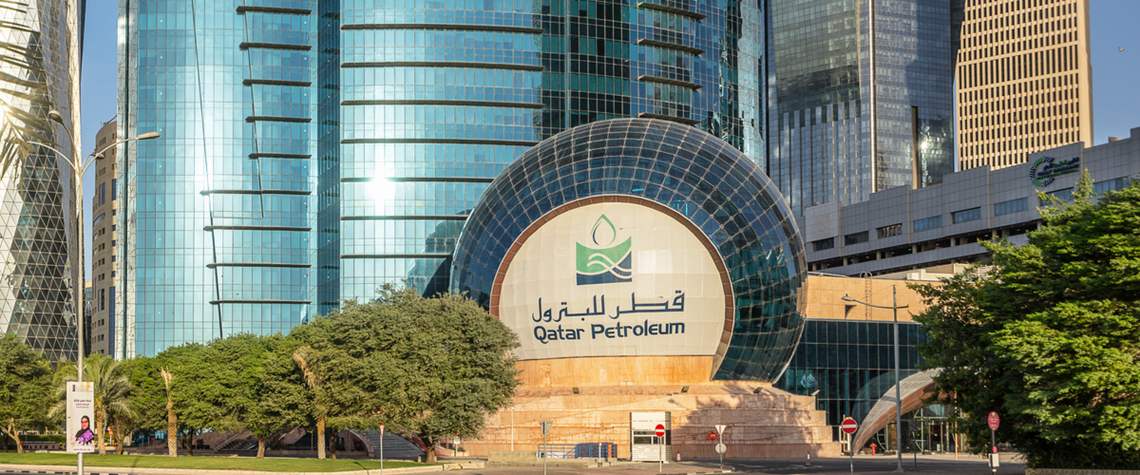
Qatar Petroleum headquarters in Doha
Qatar QatarEnergy China Cnooc
Simon Ferrie
29 September 2021
Follow @PetroleumEcon
Forward article link
Share PDF with colleagues

Qatar and China ink another LNG supply deal

State-owned Qatar Petroleum has signed another long-term LNG supply deal, this time with Chinese NOC Cnooc

Qatar Petroleum will supply Cnooc with 3.5mn t/yr of LNG for 15 years, with the sale and purchase agreement (SPA) starting in January 2022. The deal expands upon an existing relationship between the companies, since Cnooc has been taking Qatari LNG since 2009. The SPA helps support Qatar Petroleum’s rapid expansion plans with guaranteed income streams, while also partially shielding buyer CNOOC from the current strength and volatility of LNG prices. Other customers in the established east Asian LNG markets—China, Japan and South Korea—may also follow suit and lock-in additional long-term contracted supply in response to high spot prices, since the Platts JKM spot price broke the $20/mn Btu

Also in this section
Germany under pressure to solve Rosneft refinery problem
7 November 2025
The Russian company’s German assets are under Berlin’s management and are exempt from sanctions, for now, but a permanent solution still needs to be found
Lukoil loses its growth prospects
6 November 2025
The Russian firm made a significant attempt to expand overseas over the past two decades but is now divesting its global operations
Letter from Europe: Western retreat raises doubts over climate leadership
Opinion
6 November 2025
After years of pursuing ideologically driven climate leadership, Western powers are now stepping back under mounting political pressure and rising populist opposition—prompting concern essential climate action could be sidelined
Turkmenistan's pipe dream
5 November 2025
Construction of the pipeline in Afghanistan is making tangible progress, but extending it into Pakistan and India remains unrealistic for political reasons

Share PDF with colleagues

COPYRIGHT NOTICE: PDF sharing is permitted internally for Petroleum Economist Gold Members only. Usage of this PDF is restricted by <%= If(IsLoggedIn, User.CompanyName, "")%>’s agreement with Petroleum Economist – exceeding the terms of your licence by forwarding outside of the company or placing on any external network is considered a breach of copyright. Such instances are punishable by fines of up to US$1,500 per infringement
Send

Forward article Link

Send
Sign Up For Our Newsletter
Project Data
Maps
Podcasts
Social Links
Featured Video
Home
  • About us
  • Subscribe
  • Reaching your audience
  • PE Store
  • Terms and conditions
  • Contact us
  • Privacy statement
  • Cookies
  • Sitemap
All material subject to strictly enforced copyright laws © 2025 The Petroleum Economist Ltd
Cookie Settings
;

Search
