


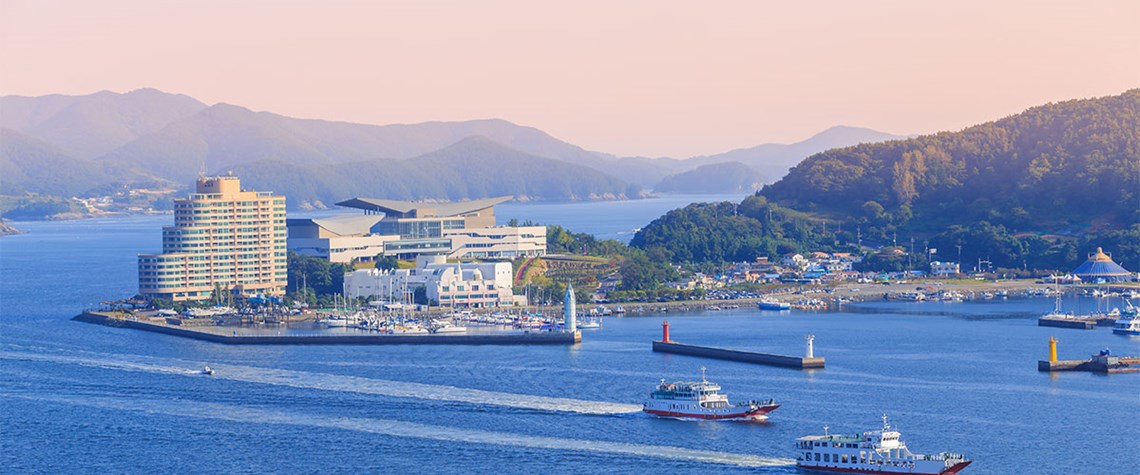
Tongyeong, South Korea
Asia continues long-term LNG supply quest
South Korean utility is the latest to sign up for contractual volumes as the continent’s purchasers appear to put a greater premium on supply security than Europeans
TotalEnergies and Korea’s Hanwha Energy have signed an SPA that will see the French major supply the utility with 600,000t/yr of LNG for 15 years from 2024. The deal takes the volumes of new term supply to which Asian buyers have agreed in the three months since Russia’s invasion of Ukraine disrupted the global gas market to almost 11.3mn t/yr, by Petroleum Economist calculations (see Fig.1). In sharp contrast, European utilities have inked deals for only half that amount in the same period. And it is only two companies—France’s Engie and Poland’s Pgnig—that have been responsible for securing that European supply. Hanwha is the seventh different Asian buyer to sign a term contract, joining f

Also in this section
10 March 2026
By shutting the Strait of Hormuz, Iran has cut exports of distillate-rich Middle Eastern crude, jet fuel and diesel, and is holding the energy market hostage
10 March 2026
Eni’s director for global gas and LNG portfolio, Cristian Signoretto, discusses how demand will respond to rising LNG supply, and how the company is expanding its own gas and LNG operations through disciplined, capital-efficient investments
9 March 2026
Petroleum Economist analysis sees increases in output from Saudi Arabia, Venezuela and Kazakhstan among others before region’s murky descent
9 March 2026
Energy sanctions are becoming an increasingly prominent tool of US foreign policy, with the country’s growth in oil and gas production allowing it to impose pressure on rivals without jeopardising its own energy security or that of its allies, argues Matthew McManus, a visiting fellow at the National Center for Energy Analytics


