


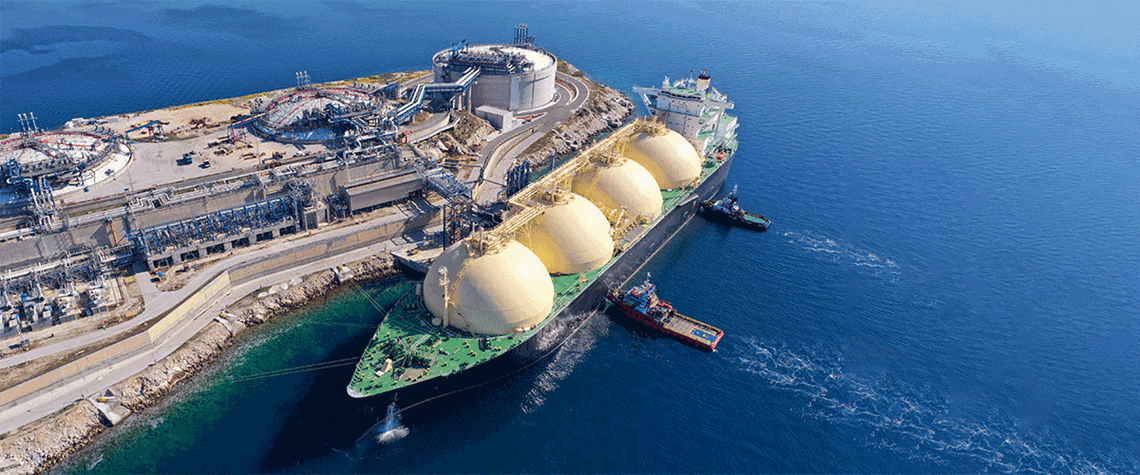
Capex on new LNG capacity has significantly increased over the past several years
Global LNG analysis report 2023 — Part 1
Decarbonisation and the war in Ukraine are just two of the factors driving the massive investment in liquefaction and regasification around the world. The first part of this deep-dive analysis looks at developments in Africa
Numerous trends are driving the short-term and long-term demand for gas globally. These include, but are not limited to, decarbonisation efforts by numerous countries around the world and Russia’s war with Ukraine. In turn, capex on new LNG capacity—both liquefaction and regasification—has skyrocketed over the past several years, with hundreds of billions of dollars in announced investments under development globally. According to the Gas Exporting Countries Forum (GECF), global gas demand will continue to increase to 2050 (see Fig.1). The forum’s report, Global Gas Outlook 2050, sees demand surging to more than 5,600bn m³/yr by 2050. Nearly 50pc of the demand growth will come from the Asia-

Also in this section
13 March 2026
Brussels is again weighing a cap on gas prices amid the Hormuz crisis, but the measure could backfire by deterring the LNG cargoes Europe urgently needs
12 March 2026
Emergency oil stocks provide a last line of defence to oil market shocks, so the IEA’s unprecedented 400m bl release represents something of a double-edged sword
12 March 2026
LPG could rapidly expand access to clean cooking across Africa and prevent hundreds of thousands of deaths from indoor air pollution each year, but infrastructure shortages and regulatory barriers are slowing investment and market growth
11 March 2026
Missiles over Dubai and disruption in Hormuz are testing the emirate’s reputation—and shaking the energy hub at the centre of the Gulf economy


