


Newsletters | Request Trial | Log in | Advertise | Digital Issue   |   Search
  • Upstream
  • Midstream & Downstream
  • Gas & LNG
  • Trading & Markets
  • Corporate & Finance
  • Geopolitics
  • Podcasts
Search
Related Articles
Sasol delays South Africa’s ‘gas cliff’
The company will use methane-rich gas produced from local coal to temporarily replace lost supplies from Mozambique
Hydrocarbon Processing Refining Databook 2025: Middle East & Africa
The Middle East is focusing on modernisation and expansion projects, while Africa is seeking to reduce its imports of refined products
Outlook 2025: The importance of ensuring a just transition for developing nations
While the global energy transition is essential for reaching net zero, it is equally important that less-developed countries are allowed to realise the benefits of their hydrocarbon resources
Moscow’s moves may impede Africa’s energy ambitions
Upstream projects may not benefit from Russia’s involvement, but South Africa might be seeking to become an importer of Russian molecules
Majors pull out of flagship South African gas projects
Without a pipeline of developments in place, the country’s energy crisis is poised to worsen
Namibia’s success boosts other frontiers
Exploration efforts are increasingly spreading into South African and even South American waters
Karpowership charts unique course
The floating power station specialist discusses its plans in South Africa and elsewhere
Rise of Brics challenges oil world order
The five economies are shaking up global markets, and they could be on the cusp of a major break from the existing order
Can gas solve South Africa’s power crisis?
Domestic production and LNG imports are on the table as the country seeks to restore energy security
Eco Atlantic sees promise on the frontiers
The independent tells Petroleum Economist it sees further opportunities in Guyana, South Africa and Namibia
South Africa
Ian Lewis
23 May 2019
Follow @PetroleumEcon
Forward article link
Share PDF with colleagues

Can Brulpadda find deliver on high hopes?

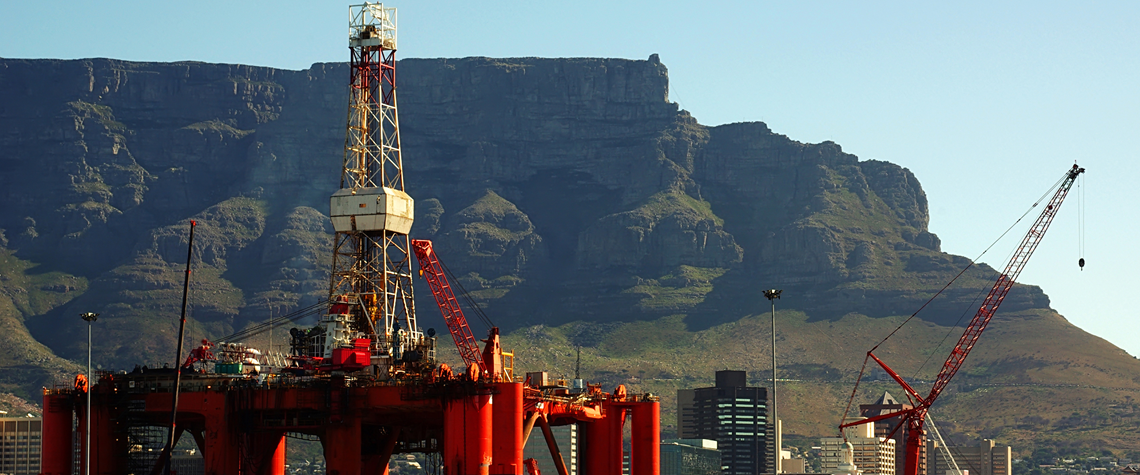
Total has made what could be a major discovery in South Africa, but there is a long way to go before the commercial prospects become clear

Total's deepwater Brulpadda find offshore South Africa is being touted as the long-awaited energy discovery that could help transform the country's economy and hasten the demise of coal as a power feedstock. But, while it promises to bring in valuable revenues and much-needed gas supply, the wider impact may be less far-reaching than some are predicting. In February, Total said it had opened up a "a new world-class gas and oil play" with a gas condensate discovery on its Brulpadda prospect on Block 11B/12B, located some 175km (109 miles) off Mossel Bay on the southern coast. The discovery could hold up to 1bn bl oe of gas and condensate light oil, according to Patrick Pouyanné, Total's chief

Also in this section
The illusion of supply: Rethinking energy security when oil cannot move
16 April 2026
Demand for oil is falling because supply cannot meet it, not because it is no longer required
Letter on Africa: Cutting methane can ease Africa’s energy crunch
Opinion
16 April 2026
The continent has an immediate opportunity to make the most of its energy resources by capturing gas that is currently slipping away
Letter from Europe: Energy transition meets reality
Opinion
15 April 2026
The continent is seeing political pushback to climate plans, corporate reassessment of transition goals and rising supply risk in a fractured global order
Is this nuclear power’s big moment?
15 April 2026
The Middle East energy crisis may turn out to be pivotal to the industry’s long-term expansion, but significant challenges still stand in its way

Share PDF with colleagues

COPYRIGHT NOTICE: PDF sharing is permitted internally for Petroleum Economist Gold Members only. Usage of this PDF is restricted by <%= If(IsLoggedIn, User.CompanyName, "")%>’s agreement with Petroleum Economist – exceeding the terms of your licence by forwarding outside of the company or placing on any external network is considered a breach of copyright. Such instances are punishable by fines of up to US$1,500 per infringement
Send

Forward article Link

Send
Sign Up For Our Newsletter
Project Data
Maps
Podcasts
Social Links
Featured Video
Home
  • About us
  • Subscribe
  • Reaching your audience
  • PE Store
  • Terms and conditions
  • Contact us
  • Privacy statement
  • Cookies
  • Sitemap
All material subject to strictly enforced copyright laws © 2025 The Petroleum Economist Ltd
Cookie Settings
;

Search
