


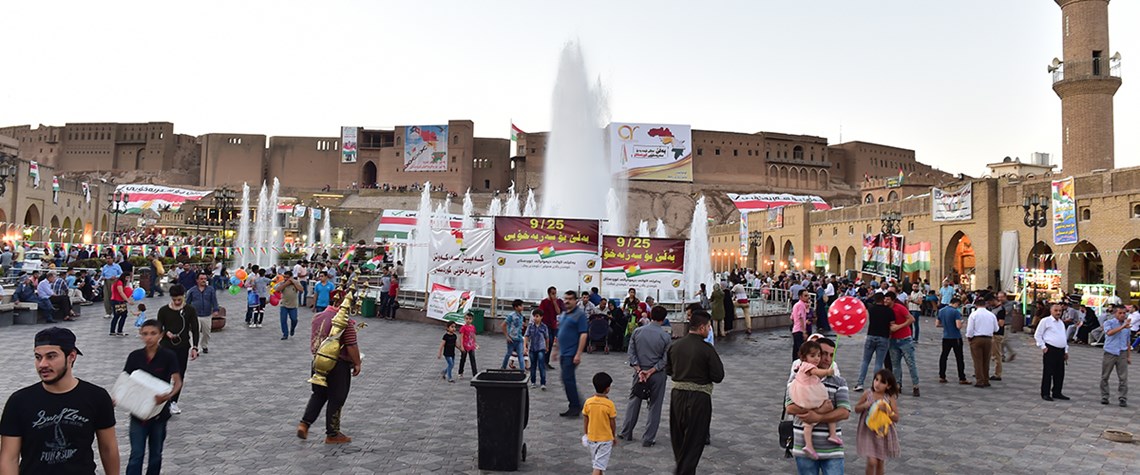
Iraqi Kurdistan begins its recovery after a difficult year
A resurgent energy sector and likely better relations with Baghdad make for a brighter KRI future
The Kurdistan Region of Iraq (KRI) started 2018 in an awful mess. After a misjudged independence referendum in October 2017, the region lost almost half its land—and oil export capacity—as federal forces retook a swath of contested territory, including the oil-rich city of Kirkuk. The Kurdistan Regional Government (KRG) faced insolvency, and its leadership felt betrayed and isolated. However, the KRG's pipeline exports, which collapsed from around 580,000 bl/d to a post-Kirkuk level of 230,000 bl/d, have since recovered to around 400,000 bl/d. There is even better news ahead: planned upgrades and drilling programmes could add around 100,000 bl/d of new production capacity by the end of 2019.

Also in this section
16 April 2026
Demand for oil is falling because supply cannot meet it, not because it is no longer required
16 April 2026
The continent has an immediate opportunity to make the most of its energy resources by capturing gas that is currently slipping away
15 April 2026
The continent is seeing political pushback to climate plans, corporate reassessment of transition goals and rising supply risk in a fractured global order
15 April 2026
The Middle East energy crisis may turn out to be pivotal to the industry’s long-term expansion, but significant challenges still stand in its way


