


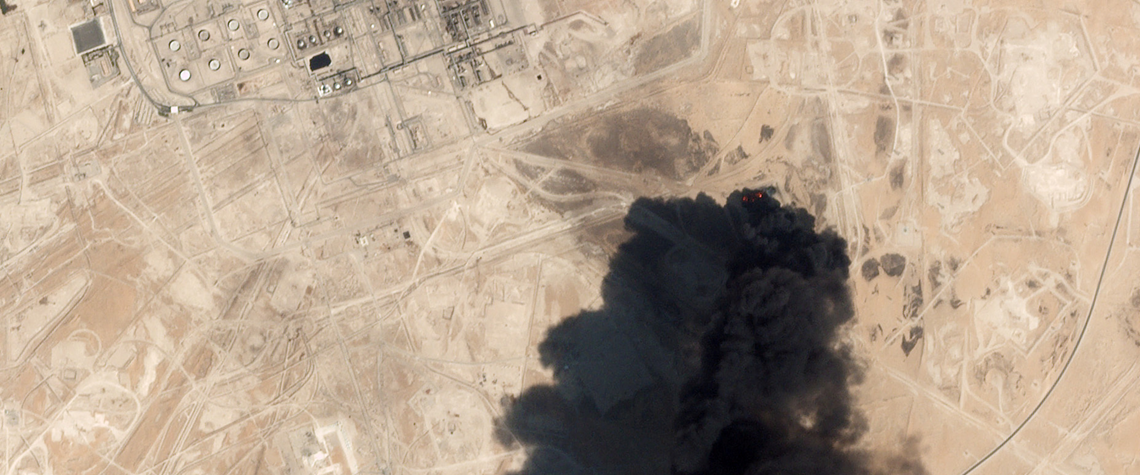
A satellite image shows a drone strike on an Aramco oil facility in Abqaiq, Saudi Arabia
Oil and trouble in the Gulf
Gulf producers learn that regional instability no longer guarantees high oil prices
The September attacks on Saudi Aramco’s Abqaiq processing plant and Khurais oil field—which took out about half the kingdom’s production—was the most serious in a string of destabilising developments in the Middle East during the summer and early autumn: the seizure of oil tankers; attacks on tankers; the sacking of the Saudi oil minister; riots in Iraq and Egypt; an acceleration of Iranian uranium enrichment; the Turkish invasion of northern Syria. Under normal circumstances, any one of these events could have triggered a prolonged spike in oil prices. After the Abqaiq/Khurais attacks, the price rose by about 20pc, but not for long. The average Brent spot price for that week was just over

Also in this section
13 March 2026
Brussels is again weighing a cap on gas prices amid the Hormuz crisis, but the measure could backfire by deterring the LNG cargoes Europe urgently needs
12 March 2026
Emergency oil stocks provide a last line of defence to oil market shocks, so the IEA’s unprecedented 400m bl release represents something of a double-edged sword
12 March 2026
LPG could rapidly expand access to clean cooking across Africa and prevent hundreds of thousands of deaths from indoor air pollution each year, but infrastructure shortages and regulatory barriers are slowing investment and market growth
11 March 2026
Missiles over Dubai and disruption in Hormuz are testing the emirate’s reputation—and shaking the energy hub at the centre of the Gulf economy


