


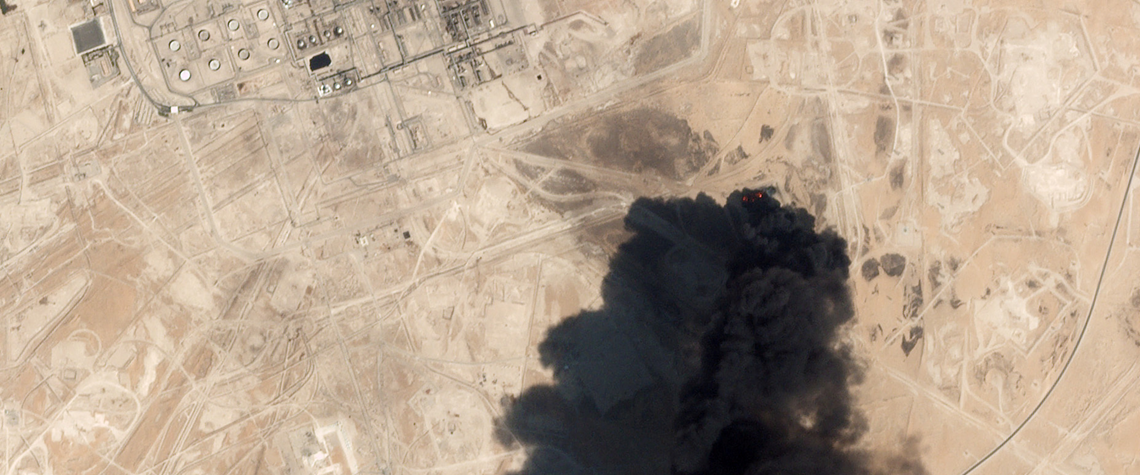
A satellite image shows a drone strike on an Aramco oil facility in Abqaiq, Saudi Arabia
Oil and trouble in the Gulf
Gulf producers learn that regional instability no longer guarantees high oil prices
The September attacks on Saudi Aramco’s Abqaiq processing plant and Khurais oil field—which took out about half the kingdom’s production—was the most serious in a string of destabilising developments in the Middle East during the summer and early autumn: the seizure of oil tankers; attacks on tankers; the sacking of the Saudi oil minister; riots in Iraq and Egypt; an acceleration of Iranian uranium enrichment; the Turkish invasion of northern Syria. Under normal circumstances, any one of these events could have triggered a prolonged spike in oil prices. After the Abqaiq/Khurais attacks, the price rose by about 20pc, but not for long. The average Brent spot price for that week was just over

Also in this section
28 April 2026
Oil traders warning of $200/bl oil are wrong, and the market should be wary of proclamations that the impact of the oil shortage has only begun to be felt and a that a ‘harsh adjustment’ is coming—even for industrialised nations
28 April 2026
Restoring supply from Saudi Arabia, the UAE, Kuwait, Qatar, Bahrain and Iraq involves complexities far beyond simply adjusting operational controls
28 April 2026
Datacentres will guzzle power at a ferocious rate, but the impact on wider energy markets will be far more complex than previously thought
28 April 2026
The key energy player faces balancing regional routes, political complexities, and creating a clear strategic vision for energy security


