


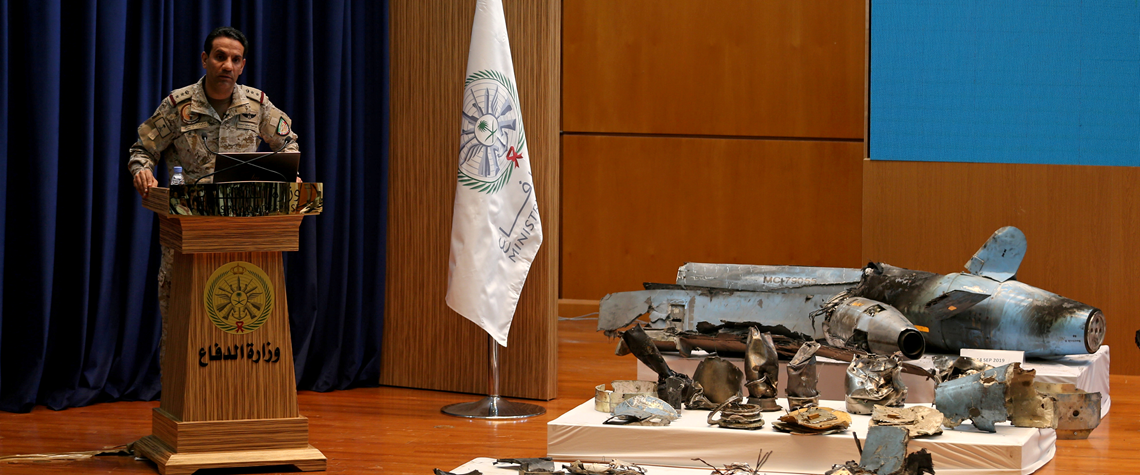
Saudi defence ministry spokesman displays missiles allegedly used to attack an Aramco oil facility
Saudi Arabia in the firing line
The oil facility attacks highlight potentially fatal vulnerabilities in Saudi Arabia’s critical infrastructure
Oil prices retrenched as the prospect of a full-blown war with Iran—blamed by both Saudi Arabia and a sanctions expanding Trump administration in Washington for the c.25 armed drones and cruise missiles assault on the world’s largest oil stabilisation plant at Abqaiq and Khurais, the kingdom’s second-largest oilfield situated about 200km (124 miles) southwest of Abqaiq—receded. Some analysts hail Saudi Aramco’s ability to restore calm in the aftermath of the incident. “Despite the damaging attacks, it is remarkable how resilient the Saudi infrastructure is proving to be,” says Jan Kalicki, an energy security expert at the Wilson Center, a Washington-based thinktank. “About half is to be r

Also in this section
13 March 2026
Brussels is again weighing a cap on gas prices amid the Hormuz crisis, but the measure could backfire by deterring the LNG cargoes Europe urgently needs
12 March 2026
Emergency oil stocks provide a last line of defence to oil market shocks, so the IEA’s unprecedented 400m bl release represents something of a double-edged sword
12 March 2026
LPG could rapidly expand access to clean cooking across Africa and prevent hundreds of thousands of deaths from indoor air pollution each year, but infrastructure shortages and regulatory barriers are slowing investment and market growth
11 March 2026
Missiles over Dubai and disruption in Hormuz are testing the emirate’s reputation—and shaking the energy hub at the centre of the Gulf economy


