


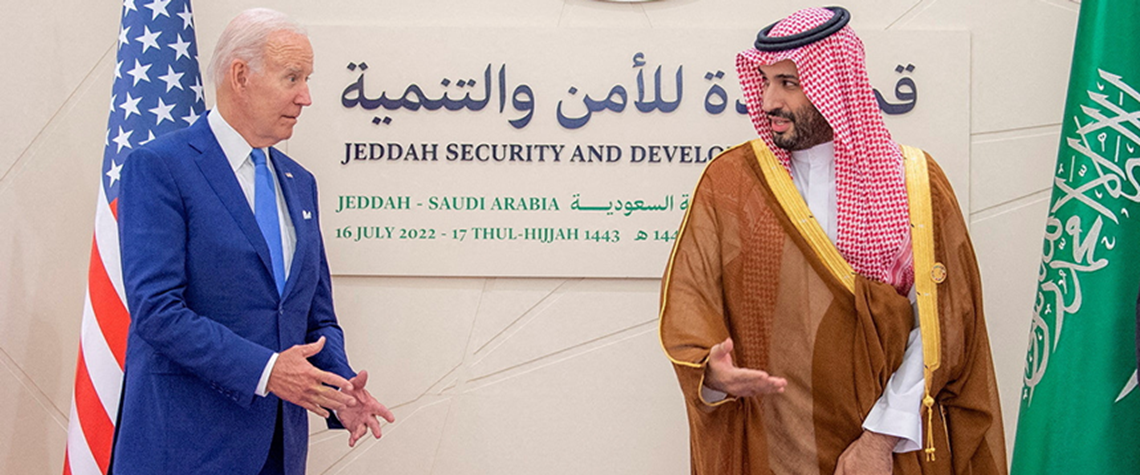
President Biden (left) with Crown Prince Mohammed bin Salman on his trip to Saudi Arabia
Letter from the Middle East: Opec balances Russia and the West
The cartel is happy to wait for further developments before committing to more drastic action
US president Joe Biden seems to have come away from his first diplomatic visit to Saudi Arabia in July empty-handed, with the Opec+ alliance in early August swiftly deciding on only a small rise in output targets from September. But the current US administration should not have expected anything different. The announced production increase by Opec+ of 100,000bl/d is so small it seems cosmetic at best and insulting at worst. And the situation is exacerbated by the fact that supply constraints mean the actual physical increment will be more like 50,000-60,000bl/d—even assuming Saudi Arabia, the UAE and Iraq make full use of their extra allowances. In contrast, a briefing by the US’s Middle Eas

Also in this section
13 March 2026
Brussels is again weighing a cap on gas prices amid the Hormuz crisis, but the measure could backfire by deterring the LNG cargoes Europe urgently needs
12 March 2026
Emergency oil stocks provide a last line of defence to oil market shocks, so the IEA’s unprecedented 400m bl release represents something of a double-edged sword
12 March 2026
LPG could rapidly expand access to clean cooking across Africa and prevent hundreds of thousands of deaths from indoor air pollution each year, but infrastructure shortages and regulatory barriers are slowing investment and market growth
11 March 2026
Missiles over Dubai and disruption in Hormuz are testing the emirate’s reputation—and shaking the energy hub at the centre of the Gulf economy


