


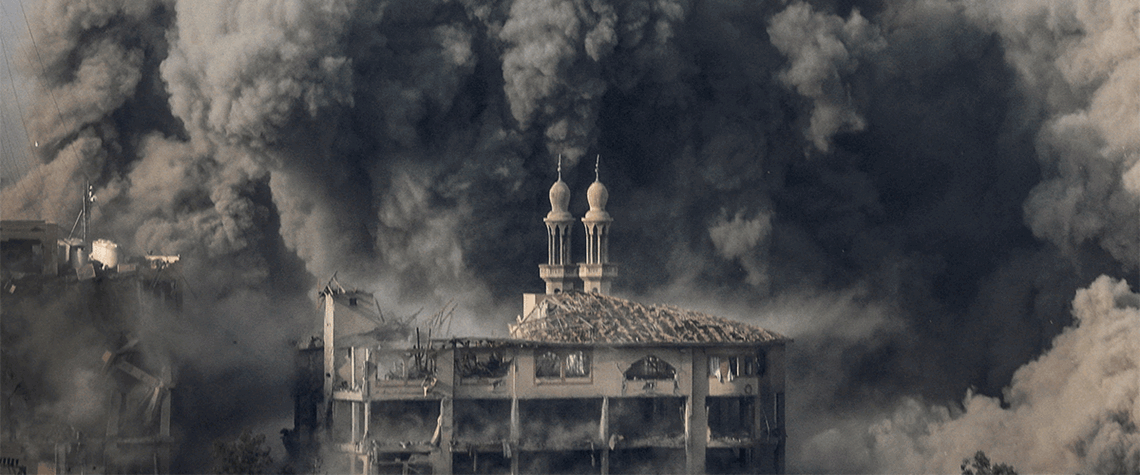
An Israeli strike in Gaza City
Israel-Hamas war clouds energy prospects
The threat of a big disruption to energy trade in the Middle East appears to be receding, but the fog of war is casting doubt on projects in the region
The war in Gaza may still escalate beyond the borders of Israel and the Palestinian territories and cause major energy disruptions, but the likelihood of this appeared to have receded by early December as a ceasefire came and went and hostilities remained largely constrained to the Gaza Strip and surrounding areas. Instead, experts say, different tracks of negotiations are picking up, with the entire Middle East in flux and Qatar’s status in particular elevated—as both an energy powerhouse and a geopolitical deal maker. Global oil and gas prices spiked immediately after the surprise attack by Hamas on 7 October, which claimed more than 1,200 Israeli lives and disrupted regional energy trade.

Also in this section
13 March 2026
Brussels is again weighing a cap on gas prices amid the Hormuz crisis, but the measure could backfire by deterring the LNG cargoes Europe urgently needs
12 March 2026
Emergency oil stocks provide a last line of defence to oil market shocks, so the IEA’s unprecedented 400m bl release represents something of a double-edged sword
12 March 2026
LPG could rapidly expand access to clean cooking across Africa and prevent hundreds of thousands of deaths from indoor air pollution each year, but infrastructure shortages and regulatory barriers are slowing investment and market growth
11 March 2026
Missiles over Dubai and disruption in Hormuz are testing the emirate’s reputation—and shaking the energy hub at the centre of the Gulf economy


