


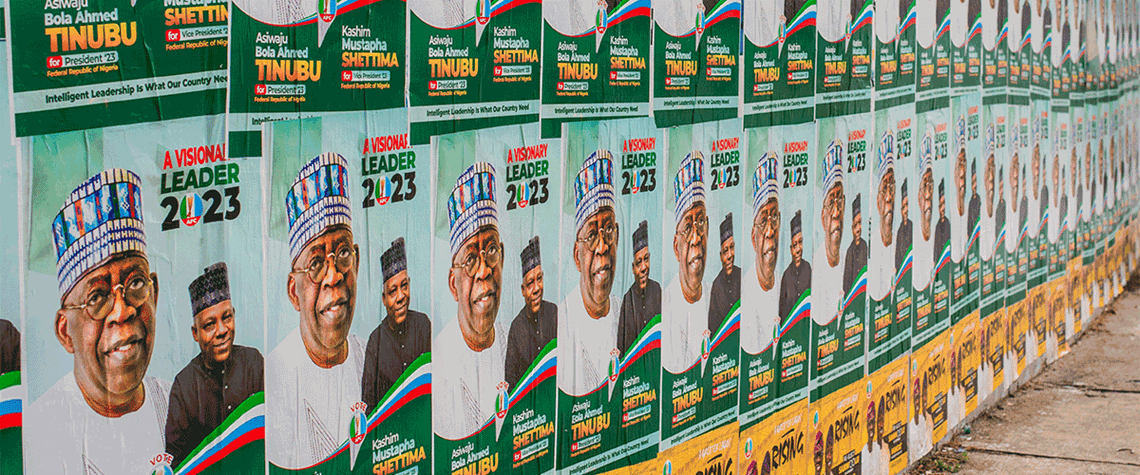
Election posters of the APC presidential candidate Bola Ahmed Tinubu
Nigeria heads for crucial elections
The country’s next president faces an uphill battle to revive the struggling oil and gas sector
Recent years have not been kind to Nigeria’s oil industry. New investment has slowed to a trickle amid a seemingly never-ending struggle with pipeline vandalism and oil theft. International players have largely divested onshore assets, preferring the relative safety of offshore fields. Production fell below 1mn bl/d last August, its lowest level for over 30 years. President Muhammadu Buhari has been unable to halt the industry’s decline during his eight years in power, although he did secure the passage of major regulatory reforms in 2021. The 80-year-old Buhari is now preparing for retirement; Nigerians will go to the polls to elect his successor on 25 February. The leading candidates inclu

Also in this section
13 March 2026
Brussels is again weighing a cap on gas prices amid the Hormuz crisis, but the measure could backfire by deterring the LNG cargoes Europe urgently needs
12 March 2026
Emergency oil stocks provide a last line of defence to oil market shocks, so the IEA’s unprecedented 400m bl release represents something of a double-edged sword
12 March 2026
LPG could rapidly expand access to clean cooking across Africa and prevent hundreds of thousands of deaths from indoor air pollution each year, but infrastructure shortages and regulatory barriers are slowing investment and market growth
11 March 2026
Missiles over Dubai and disruption in Hormuz are testing the emirate’s reputation—and shaking the energy hub at the centre of the Gulf economy


