


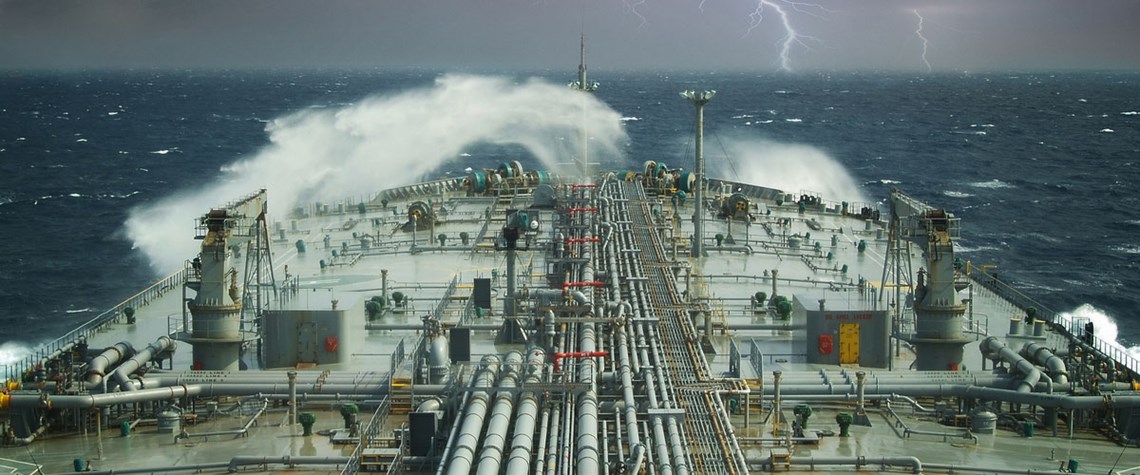
LNG is already the industry’s clear choice as transitional fuel
Shipping faces tough decarbonisation choices
Supply chains will be critical as the maritime sector looks for alternative fuels
Shipping accounts for significant greenhouse gas (GHG) emissions, and the industry is accelerating its efforts to meet ambitious UN decarbonisation goals. But it remains unclear which competing solution—or combination of solutions—will prevail. The International Maritime Organisation (IMO) is targeting a 50pc cut in GHG emissions from shipping by 2050, relative to 2008 figures, and wants to slash the sector’s carbon intensity—the amount of CO2 emitted per ton-mile—by 40pc by 2030 and 70pc by 2050. A coalition of IMO member states —which together control a major share of the world’s shipping tonnage and include Greece, Liberia, Japan, Malta, Switzerland and Singapore—propose the organisation

Also in this section
6 March 2026
The March 2026 issue of Petroleum Economist is out now!
6 March 2026
After Europe’s rapid buildout of floating LNG import capacity, Exmar CEO Carl-Antoine Saverys says future growth in floating gas infrastructure will increasingly be driven by developing markets as lower prices, rising energy demand and the need to replace coal unlock new opportunities for unconventional and tailor-made solutions
5 March 2026
Gas is a central pillar of Colombia’s energy system, but declining production poses a significant challenge, and LNG will be increasingly needed as a stopgap. A recent major offshore gas discovery offers hope, but policy improvements are also required, Camilo Morales, secretary general of Naturgas, the Colombian gas association, tells Petroleum Economist
4 March 2026
The continent’s inventories were already depleted before conflict erupted in the Middle East, causing prices to spike ahead of the crucial summer refilling season


