


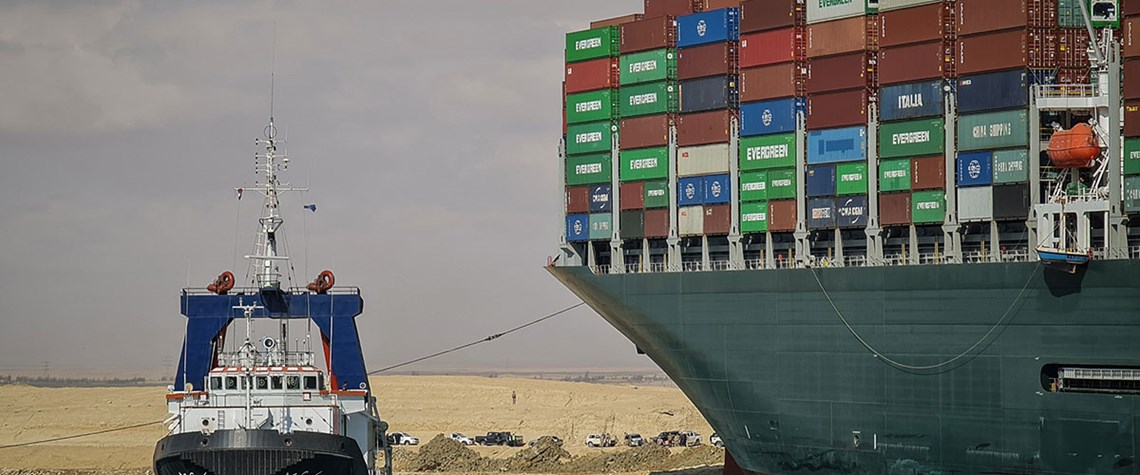
The Ever Given blocked the Suez Canal for six days
Suez crisis highlights bottlenecks
The blockage of the Suez Canal by a single vessel highlights how important navigational chokepoints are for the shipping sector and commodities markets
Containership the Ever Given was refloated in late March, six days after running aground and blocking the Suez Canal in both directions, causing significant disruption and a build-up of traffic waiting to traverse the waterway. The alternative to taking Suez is to circumnavigate Africa via the Cape of Good Hope. The distance from Rotterdam to Japan via the Cape route, for example, is around 25pc longer, and voyage time at 11 knots increases to around 54 days, up from 42 days via Suez. Hormuz is the world’s most important oil transit chokepoint That means increased fuel expenditure and the potential for knock-on disruption to port loading and unloading schedules and any subsequent voy

Also in this section
6 March 2026
The March 2026 issue of Petroleum Economist is out now!
6 March 2026
After Europe’s rapid buildout of floating LNG import capacity, Exmar CEO Carl-Antoine Saverys says future growth in floating gas infrastructure will increasingly be driven by developing markets as lower prices, rising energy demand and the need to replace coal unlock new opportunities for unconventional and tailor-made solutions
5 March 2026
Gas is a central pillar of Colombia’s energy system, but declining production poses a significant challenge, and LNG will be increasingly needed as a stopgap. A recent major offshore gas discovery offers hope, but policy improvements are also required, Camilo Morales, secretary general of Naturgas, the Colombian gas association, tells Petroleum Economist
4 March 2026
The continent’s inventories were already depleted before conflict erupted in the Middle East, causing prices to spike ahead of the crucial summer refilling season


